Nebbiolo Wine Guide
Getting to Know Nebbiolo
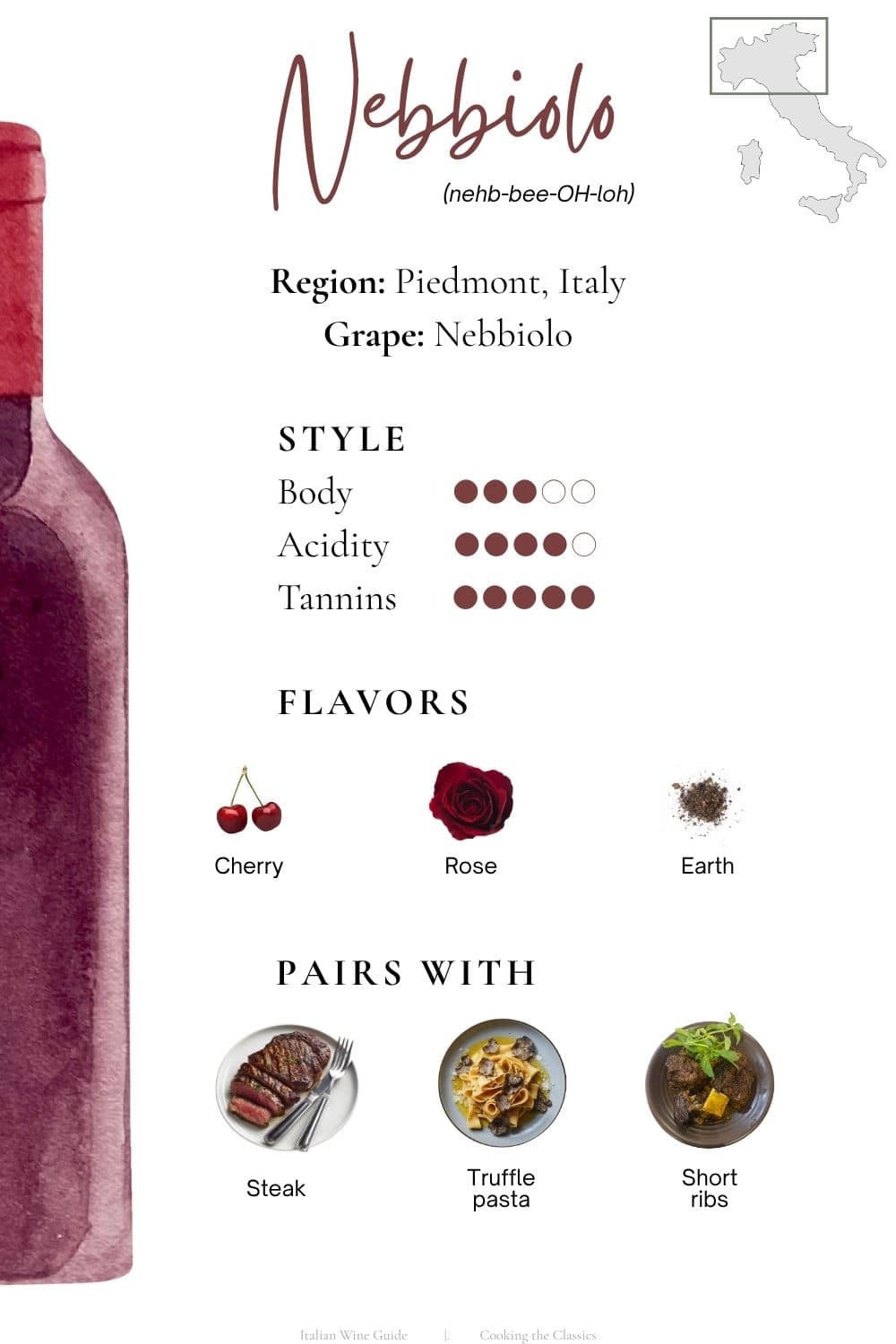
Nebbiolo is a red wine from the Piedmont region in northern Italy, known for its high tannins, bright acidity, and more structured style. It’s most closely associated with Barolo and Barbaresco, but is also made in lighter styles under broader regional labels.
It’s not as immediately approachable as other Italian reds. The structure is more pronounced, and the wine tends to open up over time, especially when served with food.
If Barbera is defined by acidity and Dolcetto by softness, Nebbiolo is defined by structure.
Nebbiolo and Piedmont
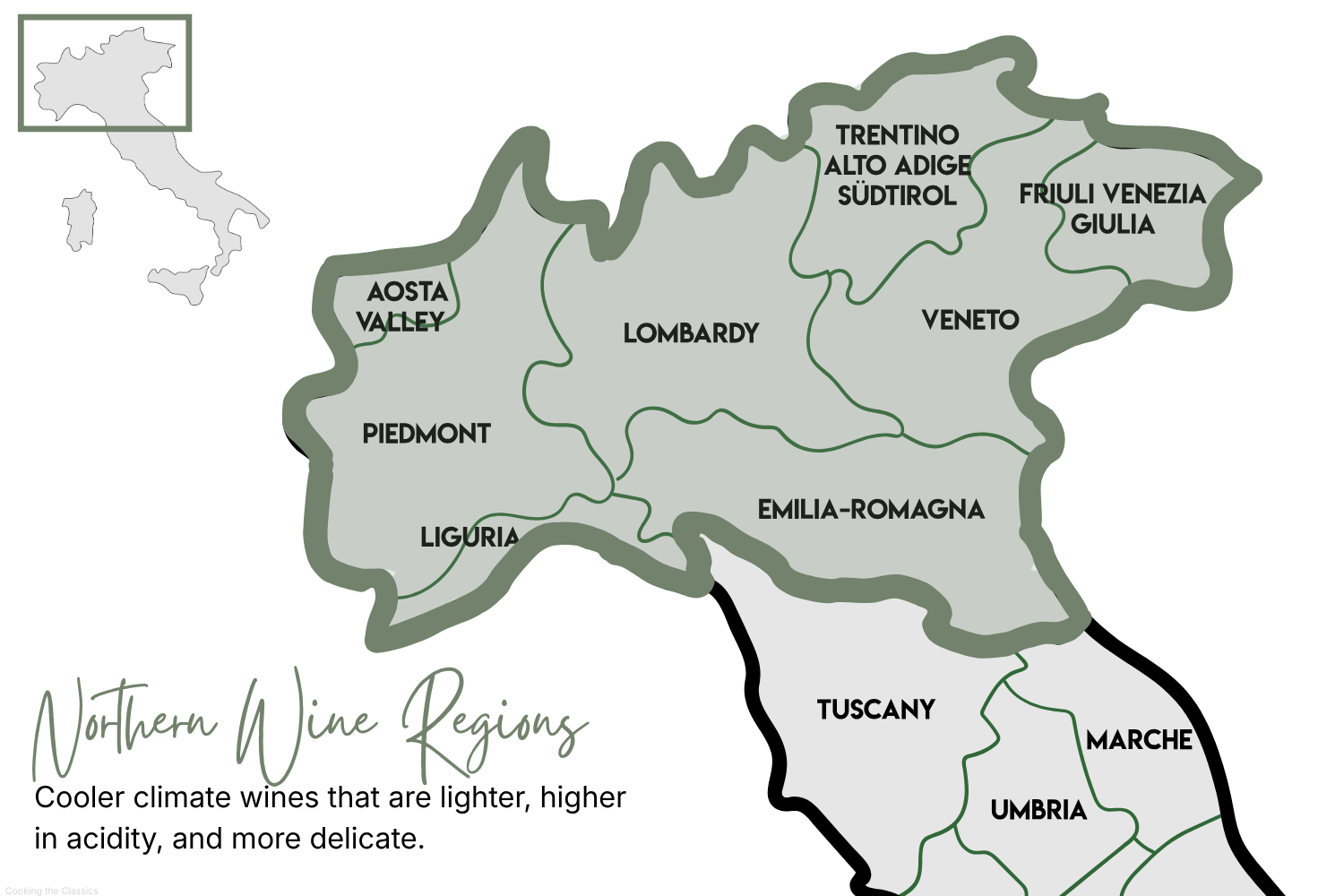
Nebbiolo comes from Piedmont in northwestern Italy, a region known for cooler temperatures and hillside vineyards. The grape is most closely tied to:
- Barolo DOCG
- Barbaresco DOCG
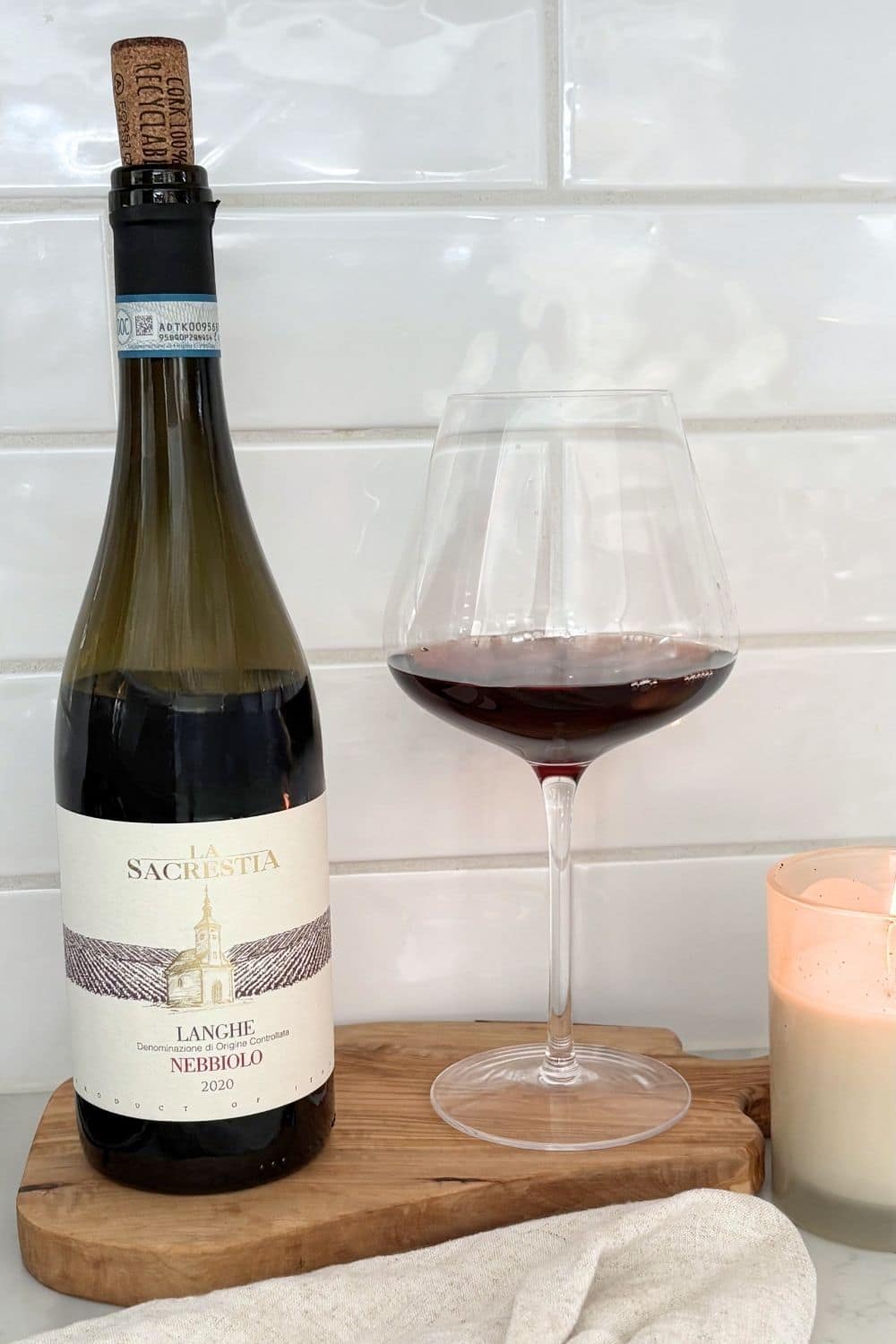
- Langhe Nebbiolo
Barolo and Barbaresco are the most structured and age-worthy expressions. Langhe Nebbiolo is typically lighter and more accessible, often a good place to start.
Nebbiolo is more sensitive to growing conditions than many other grapes, which is why it’s closely tied to specific areas within Piedmont.
The Taste and Style of Nebbiolo
Nebbiolo is typically a medium- to full-bodied red wine with high acidity and firm tannins.
Common tasting notes:
- Cherry
- Rose
- Dried herbs
- Earth
- Leather
- Sometimes tar or spice
The structure stands out first. Even when the flavors are lighter, the tannins and acidity give the wine its shape.
Compared to other Italian reds, Nebbiolo is more structured than Barbera and more assertive than Dolcetto.
What to Eat with Nebbiolo
Nebbiolo works best with dishes that have enough depth and richness to meet its structure.
It’s less suited to lighter meals and more at home alongside slower-cooked or more substantial dishes.
The tannins soften when paired with food, and the acidity helps keep richer dishes from feeling too heavy.
Choosing Nebbiolo
When buying Nebbiolo, you’ll most often see:
- Barolo
- Barbaresco
- Langhe Nebbiolo
Barolo and Barbaresco are more structured and often more expensive. Langhe Nebbiolo is usually more accessible, both in price and style.
Most bottles are still relatively easy to find, though prices vary more widely than with Dolcetto or Barbera.
If you’re starting out, Langhe Nebbiolo is often the most straightforward place to begin.
Serving Nebbiolo
Nebbiolo benefits from a bit more attention before serving.
Serving tips:
- Temperature: 60–65°F
- Glass: Larger red wine glass
- Open before serving: 30–60 minutes
- Decanting: Often helpful
- Lasts after opening: About 2–3 days in the refrigerator
If the wine feels tight or overly firm, giving it more air usually helps.
When to Open a Bottle of Nebbiolo
Nebbiolo is a good choice when the meal has more weight to it, especially dishes with mushrooms, slow-cooked meats, or richer sauces. It’s less of an everyday default and more of a wine you choose when the dish calls for it.
If you’re making something like porcini risotto or a braised meat dish, Nebbiolo is often a natural fit.
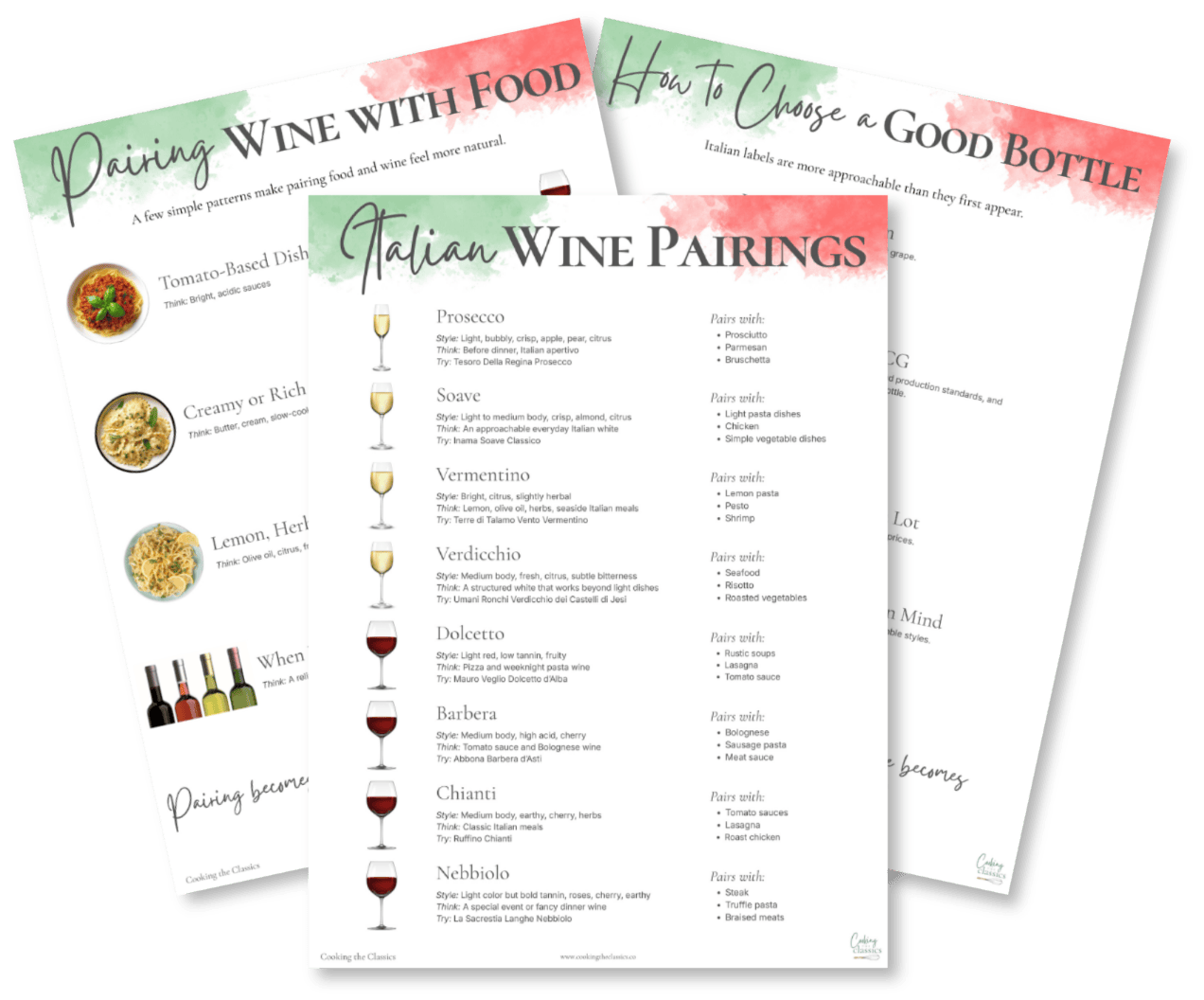
For a closer look at pairing Italian wines with food and how to read the label, download the Italian Wine Pairing Guide to keep on hand while cooking or shopping.