How to Reconstitute Dried Porcini Mushrooms
Dried porcini mushrooms are a staple in classic Italian cooking.
They bring a deep, earthy flavor that fresh mushrooms don’t quite match. Before using them, they need to be reconstituted in water. This step softens the mushrooms and creates a rich soaking liquid that adds depth to risotto, pasta sauces, and braises.
About This Process
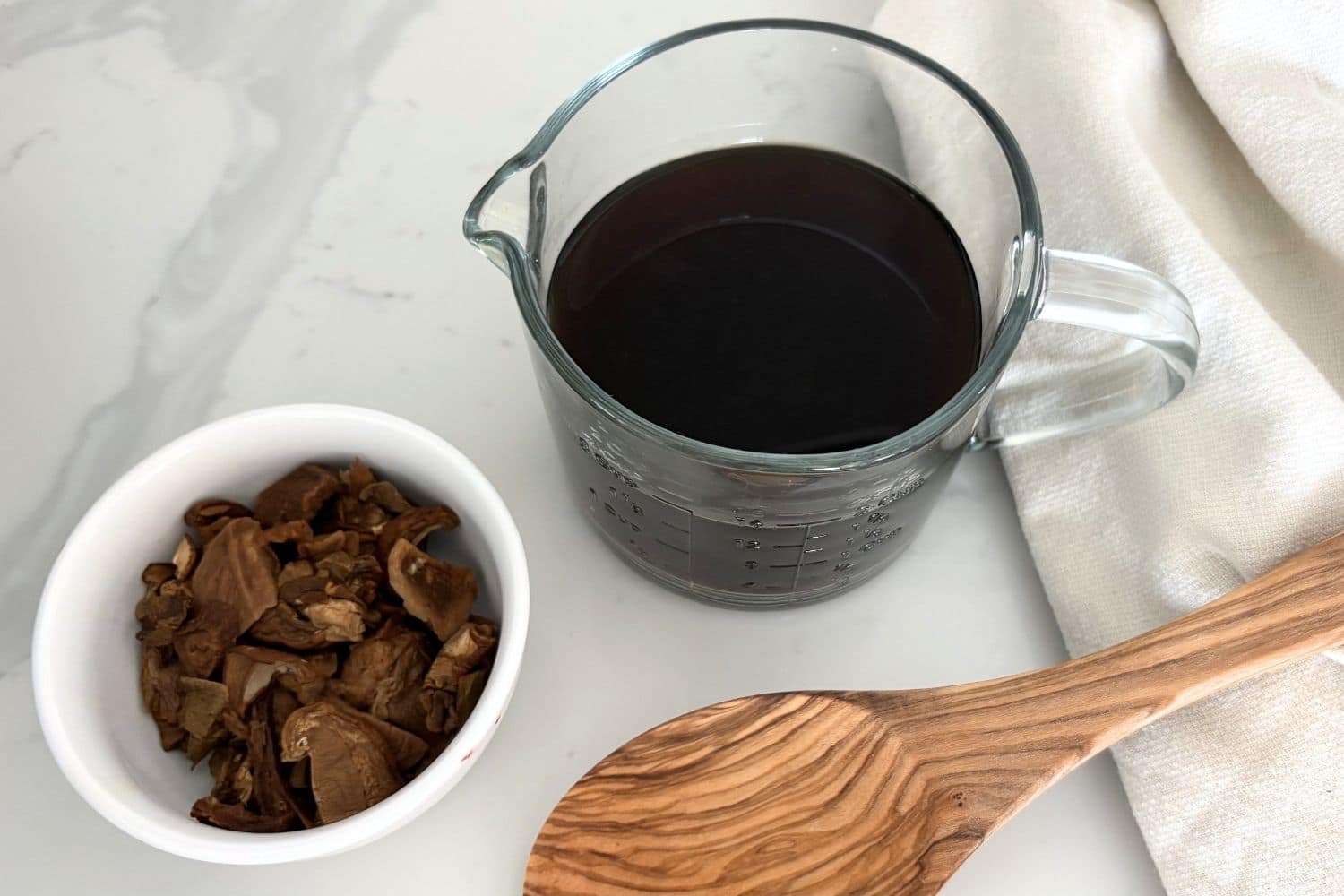
Reconstituting dried porcini mushrooms does two things at once. First, it softens the mushrooms so they can be used in cooking. At the same time, it creates a deeply flavored soaking liquid.
As the mushrooms sit in warm water, they release their flavor into the liquid. Over time, that liquid becomes dark and concentrated, carrying much of the porcini’s earthy character. Because of that, it’s rarely discarded. Instead, it’s added back into the dish, often in place of part of the broth or cooking liquid.
Dried porcini make a noticeable difference in dishes like risotto, pasta sauces, and braises.
For a closer look at pairing Italian wines with food and how to read the label, download the Italian Wine Pairing Guide to keep on hand while cooking or shopping.

What You Need
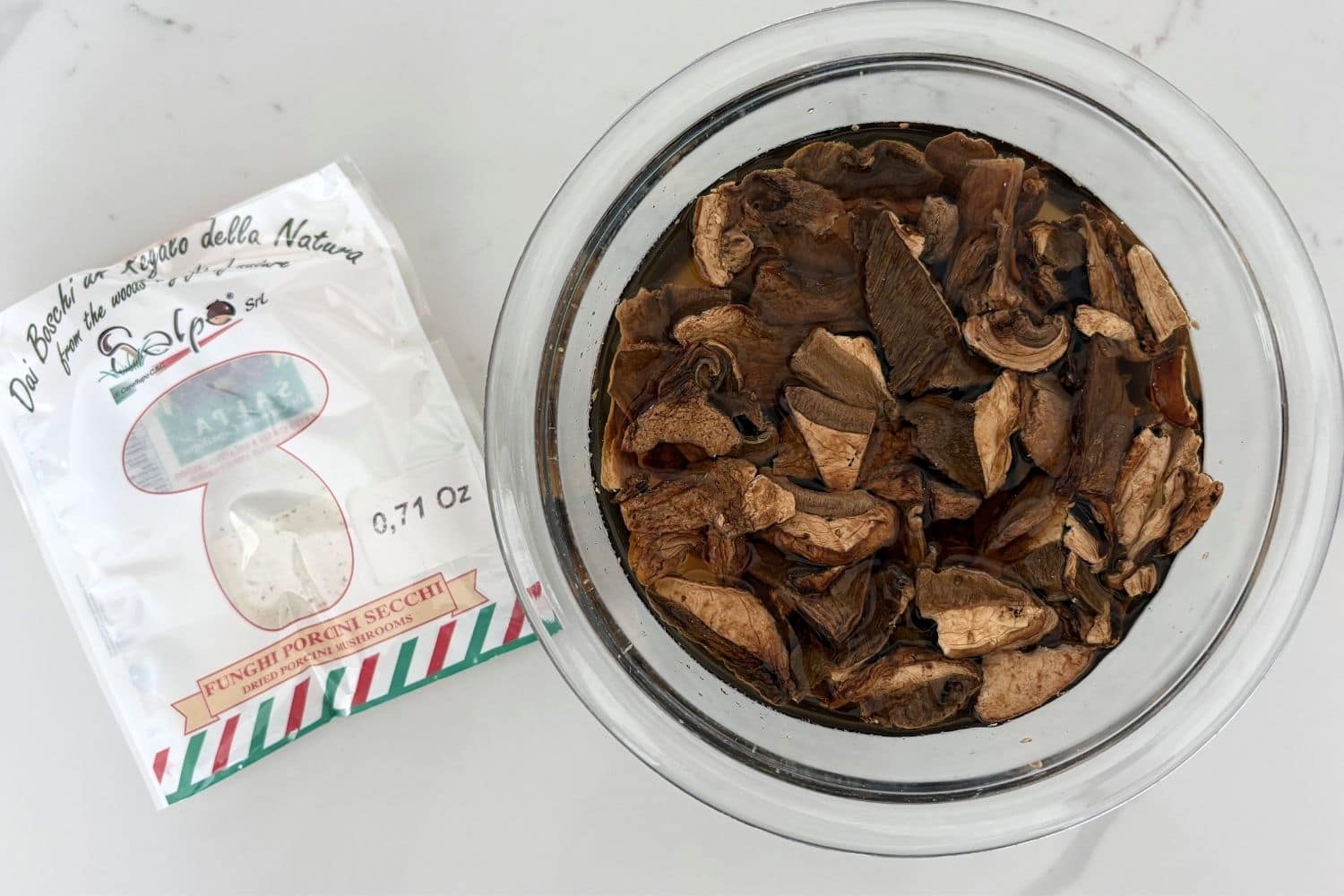
How to Reconstitute Porcini
Step 01
Place the dried porcini in a bowl and cover with warm water.
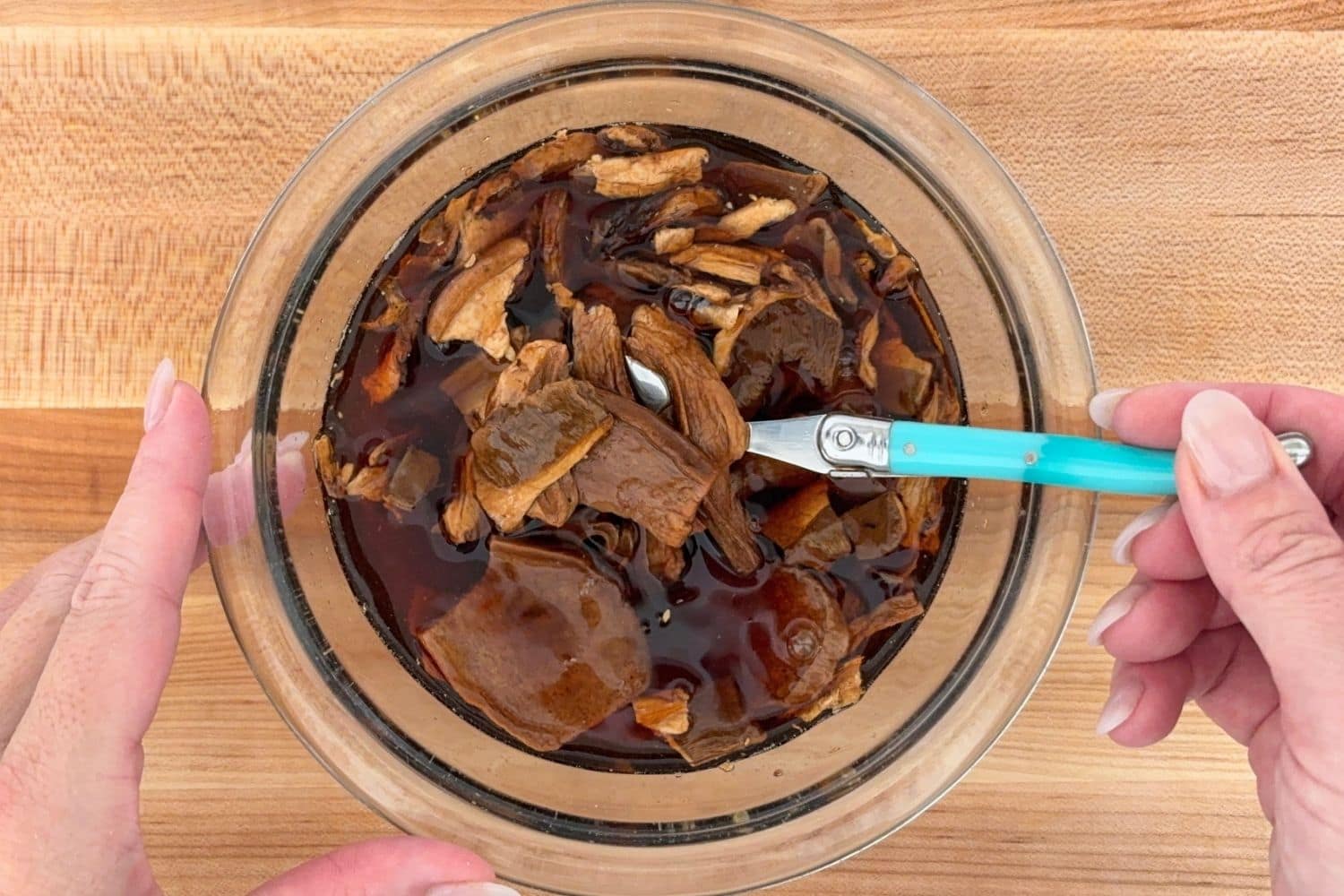
Step 02
Let them soak for about 30 to 40 minutes, until softened.
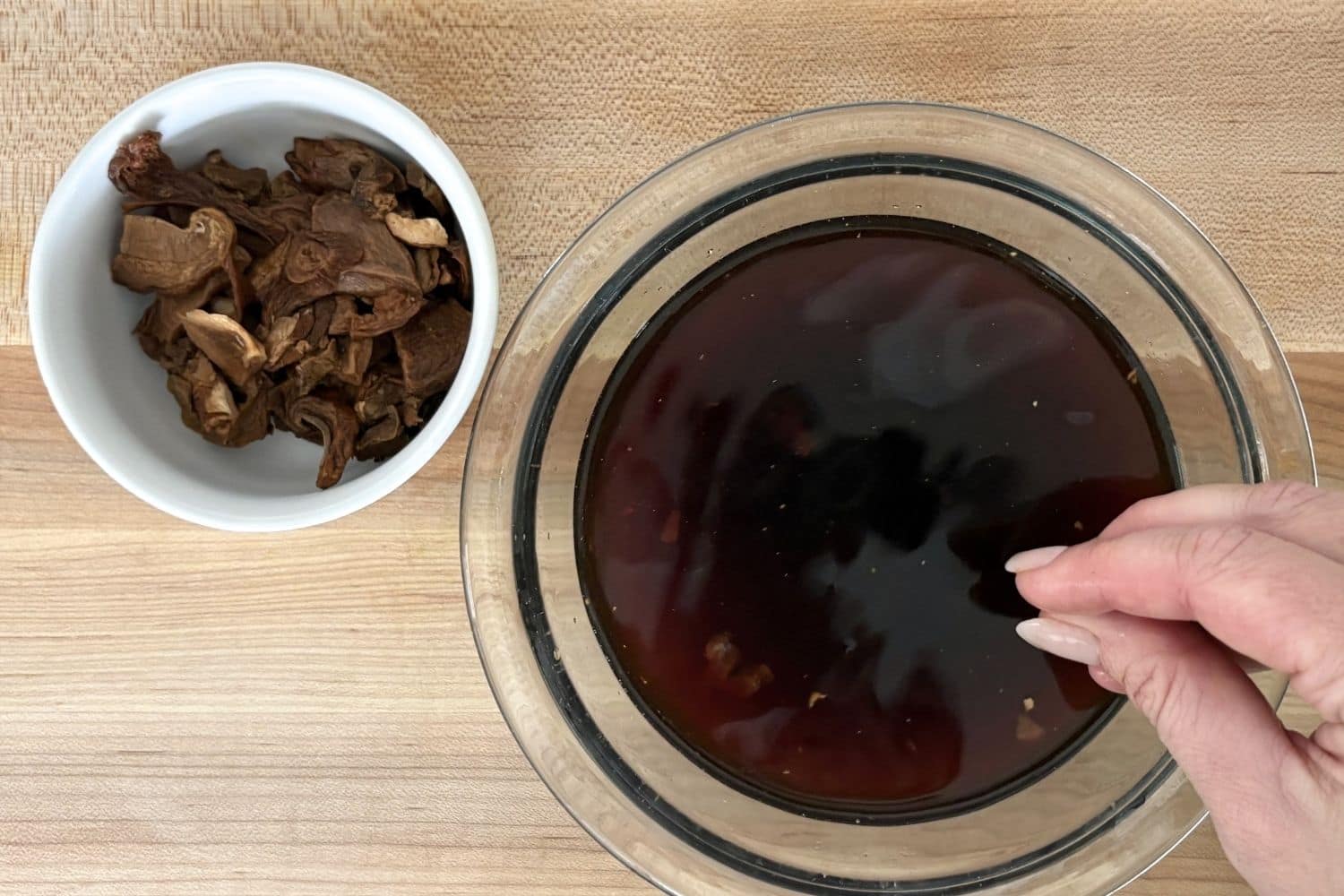
Step 03
Remove the mushrooms and squeeze them lightly, letting the liquid fall back into the bowl.
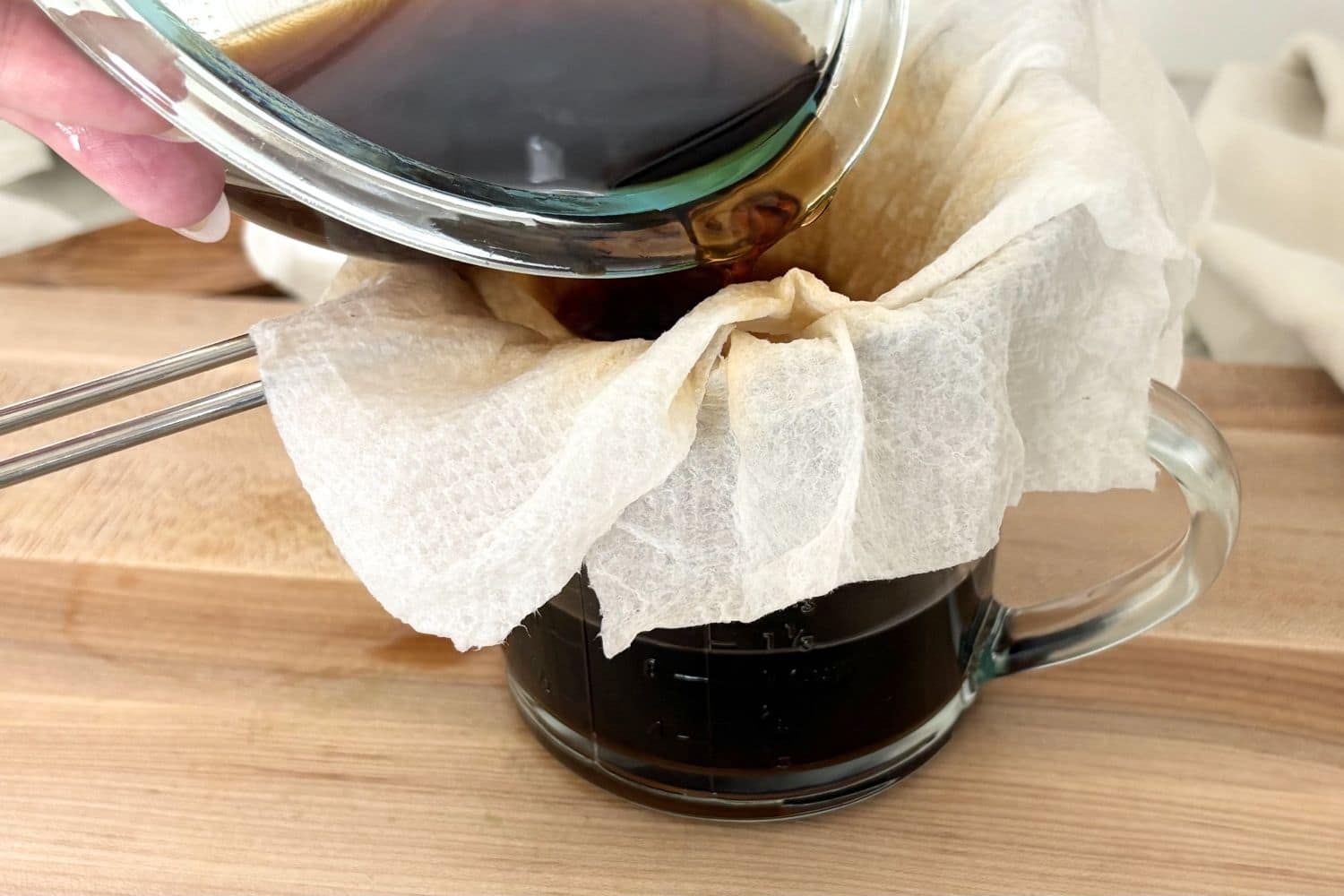
Step 04
Strain the soaking liquid through a paper towel-lined strainer, leaving the sediment behind.
Both the mushrooms and the soaking liquid play a role in the final dish.
The mushrooms add texture and a concentrated flavor. At the same time, the soaking liquid brings depth that you can’t get any other way. Because of that, most classic recipes use both rather than discarding the liquid.
Where to Use Them
- Risotto with porcini mushrooms
- Pork with tomato and porcini mushrooms
- Pasta sauces
- Braised meats
Substitutions
If you can’t find dried porcini, you can use fresh mushrooms instead.
Sauté cremini or baby bella mushrooms until browned, then add them to your dish. The flavor will be different, but still well suited for risotto or pasta.
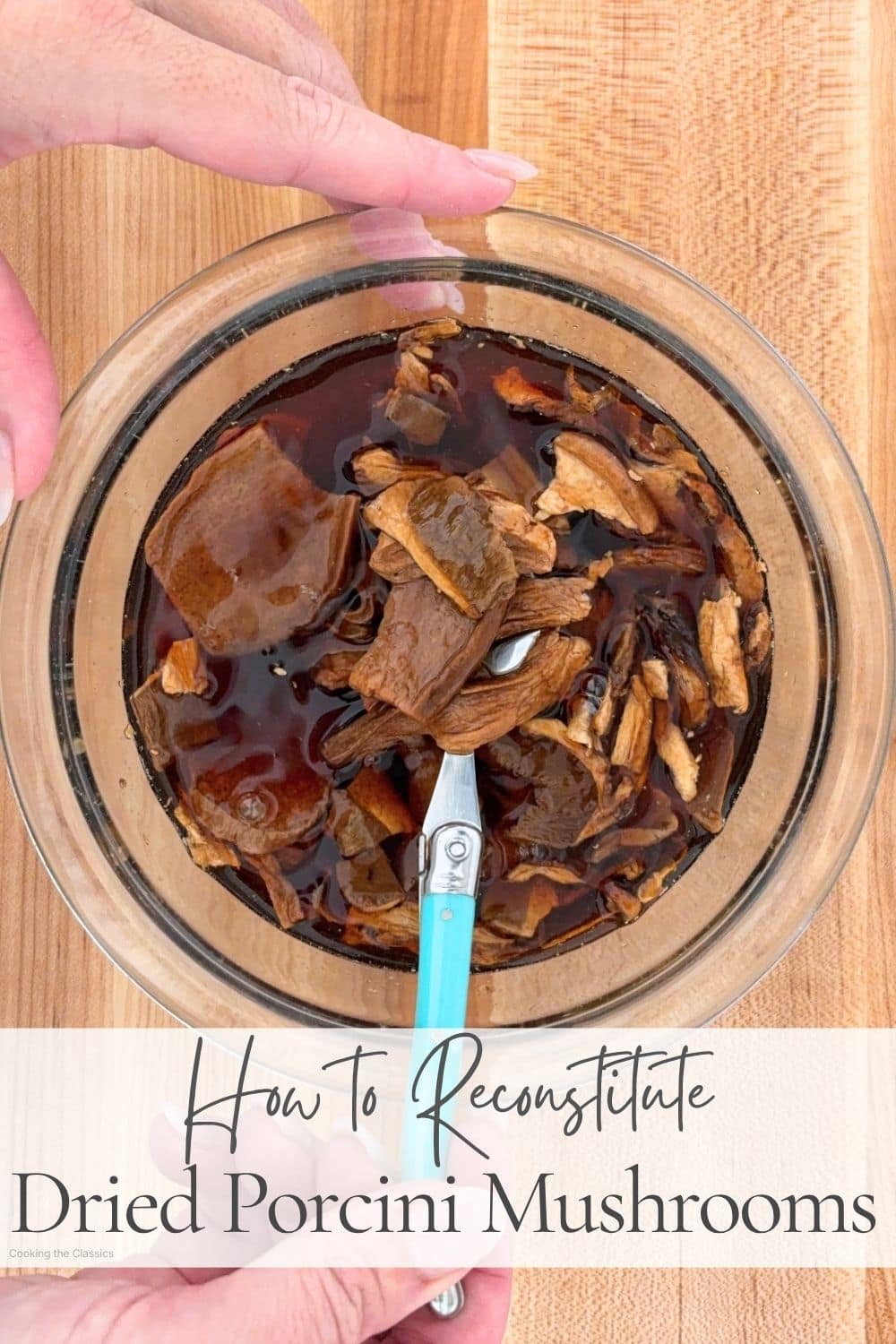
Dried porcini are used for both the mushrooms themselves and the liquid they create while soaking.
They’re easy to keep on hand and don’t take long to prepare, which makes them useful for dishes like risotto, pasta sauces, and braises.
Once you get comfortable with this step, it becomes second nature and adds a level of depth that’s hard to replace.