Moscato d’Asti Wine Guide
Getting to Know Moscato d’Asti
Moscato d’Asti is a lightly sparkling white wine from the Piedmont region of northern Italy, known for its floral aroma, gentle sweetness, and low alcohol. It is one of the most approachable Italian wines and often surprises people who think sweet wine must be heavy or syrupy.
Instead, Moscato d’Asti is fresh, bright, and delicate. The bubbles are soft and the sweetness is balanced by natural acidity.
If Prosecco is defined by crispness, and Asti Spumante by fuller sparkle, Moscato d’Asti is defined by lightness and fragrance.
Moscato d’Asti and Piedmont
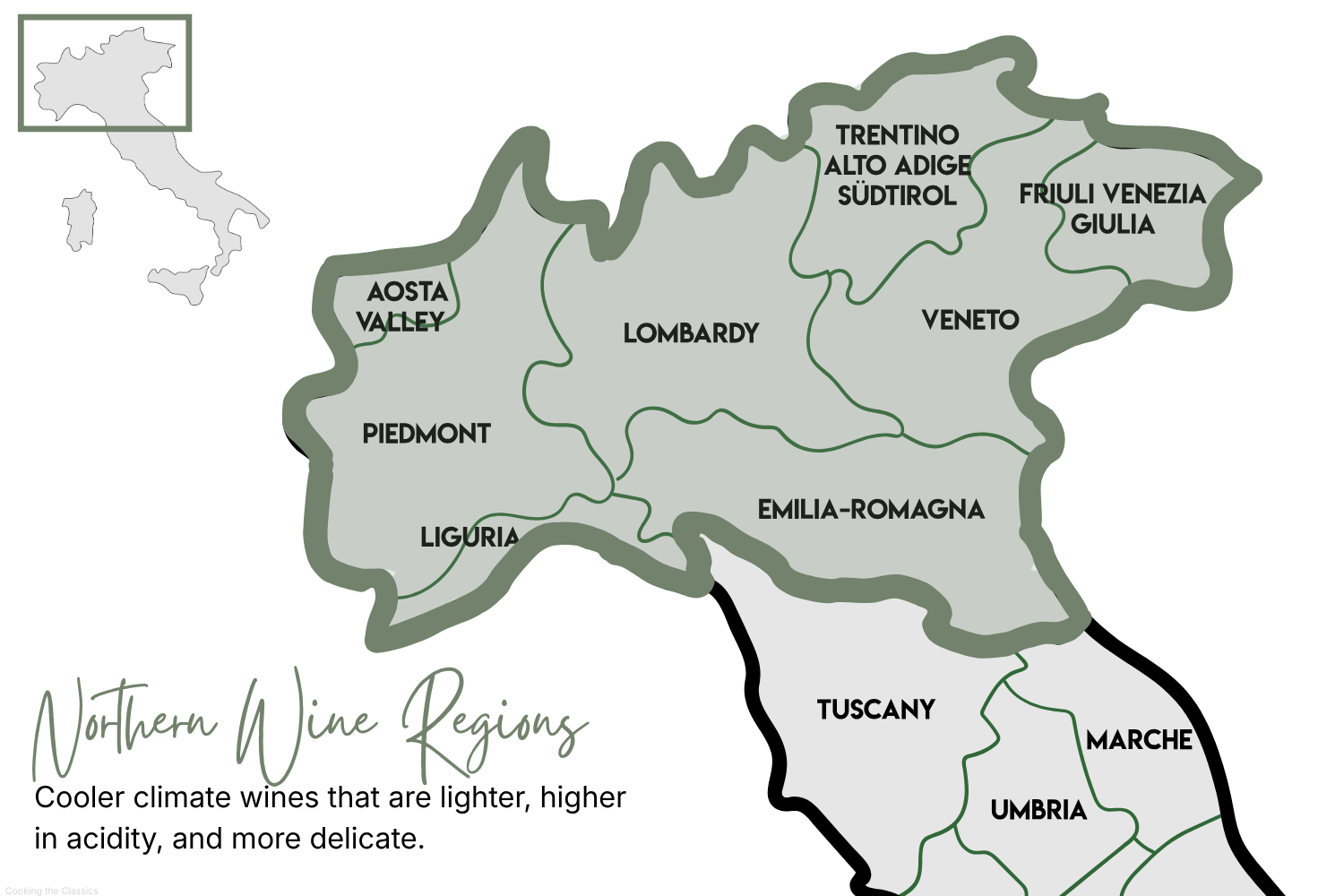
Moscato d’Asti comes from Piedmont in northwestern Italy, the same region known for Barolo, Barbaresco, and Nebbiolo.
It is made from the Moscato Bianco grape and is most closely tied to:
- Moscato d’Asti DOCG
- Asti DOCG
Moscato d’Asti is lightly sparkling (frizzante), while Asti is usually more fully sparkling (spumante).
The cooler hillsides of Piedmont help preserve acidity and aromatic freshness, which is a large part of what makes this wine so appealing.
The Taste and Style of Moscato d’Asti
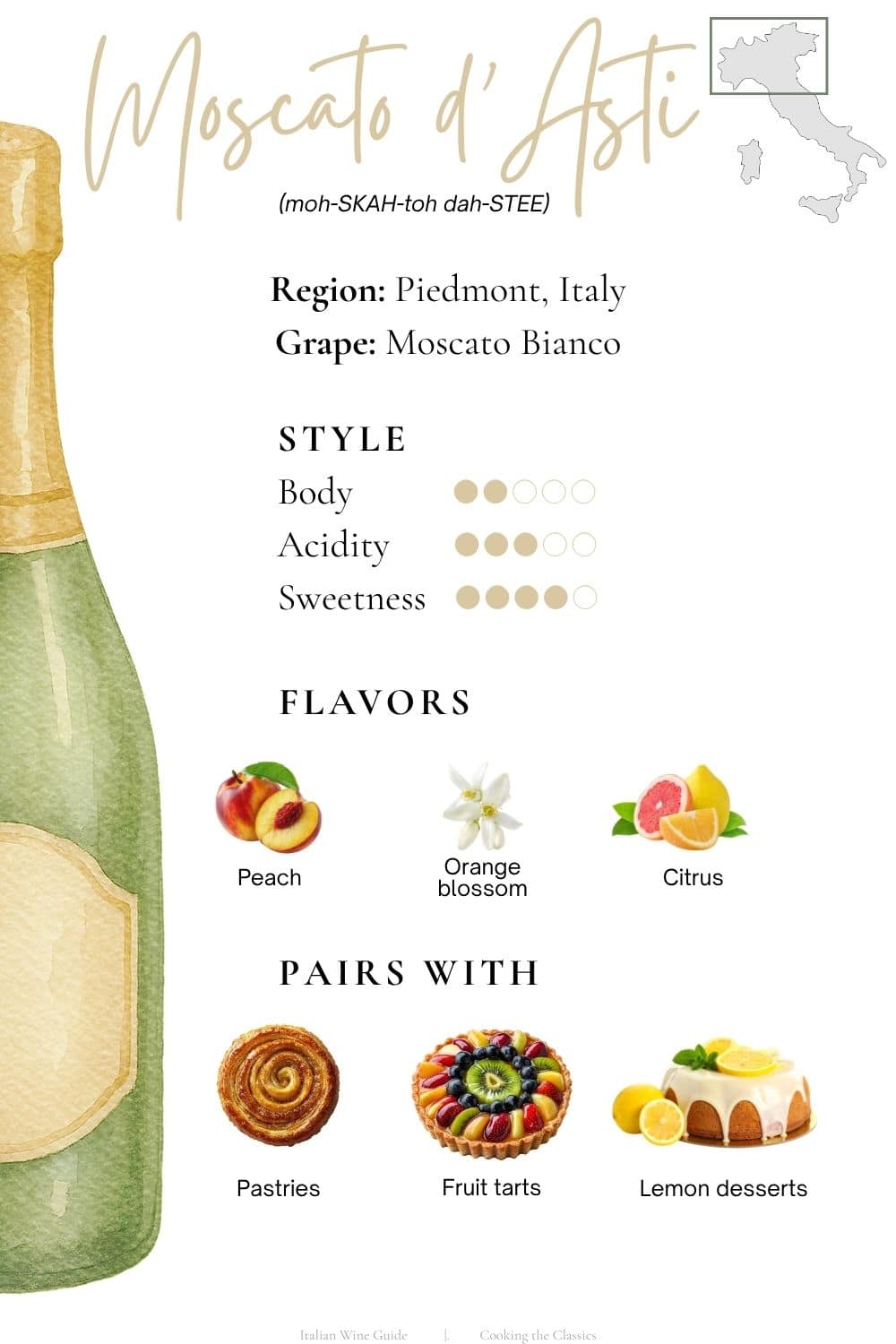
Moscato d’Asti is typically light-bodied, aromatic, gently sweet, and low in alcohol.
Common tasting notes include:
- Peach
- Apricot
- Orange blossom
- Honey
- Pear
- Fresh grapes
- Citrus
The aroma stands out immediately. Even before tasting it, the floral and fruit notes are noticeable.
Compared to many sweet wines, Moscato d’Asti feels lighter, fresher, and more delicate.
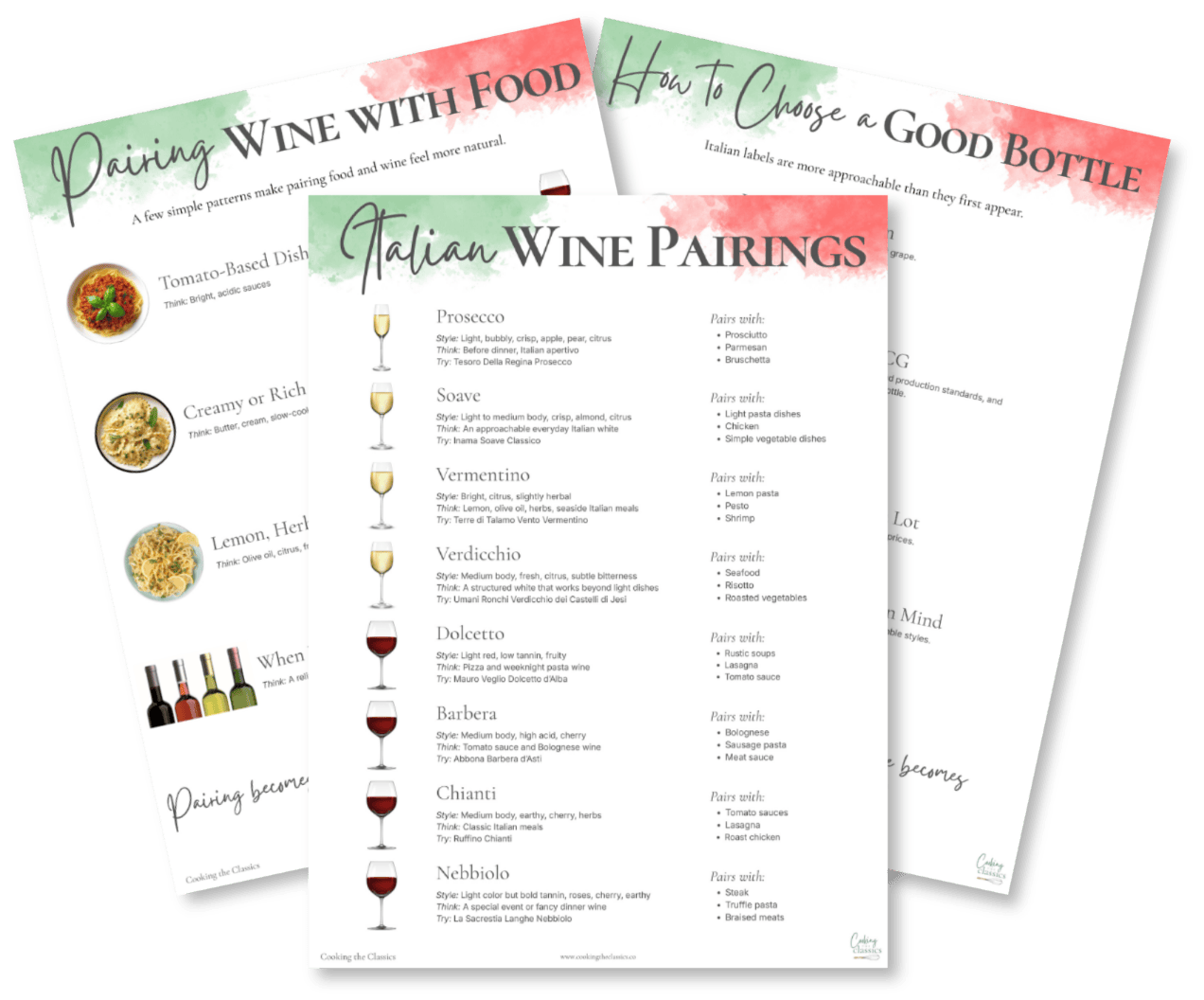
For a closer look at pairing Italian wines with food and how to read the label, download the Italian Wine Pairing Guide to keep on hand while cooking or shopping.
What to Eat with Moscato d’Asti
Moscato d’Asti works especially well with desserts, fruit-based dishes, and lightly sweet pastries.
It can also be excellent with salty foods, where the sweetness creates contrast.
The bubbles and acidity help keep it refreshing, even when paired with richer desserts.
Choosing Moscato d’Asti
When buying Moscato d’Asti, you’ll most often see:
- Moscato d’Asti DOCG
- Asti DOCG
For a softer, more delicate style, choose Moscato d’Asti. For fuller bubbles and a more celebratory feel, Asti is the better fit.
Well-known producers are widely available, and bottles are often reasonably priced compared with Champagne or many dessert wines.
If you are starting out, Moscato d’Asti DOCG is the most straightforward place to begin.
Serving Moscato d’Asti
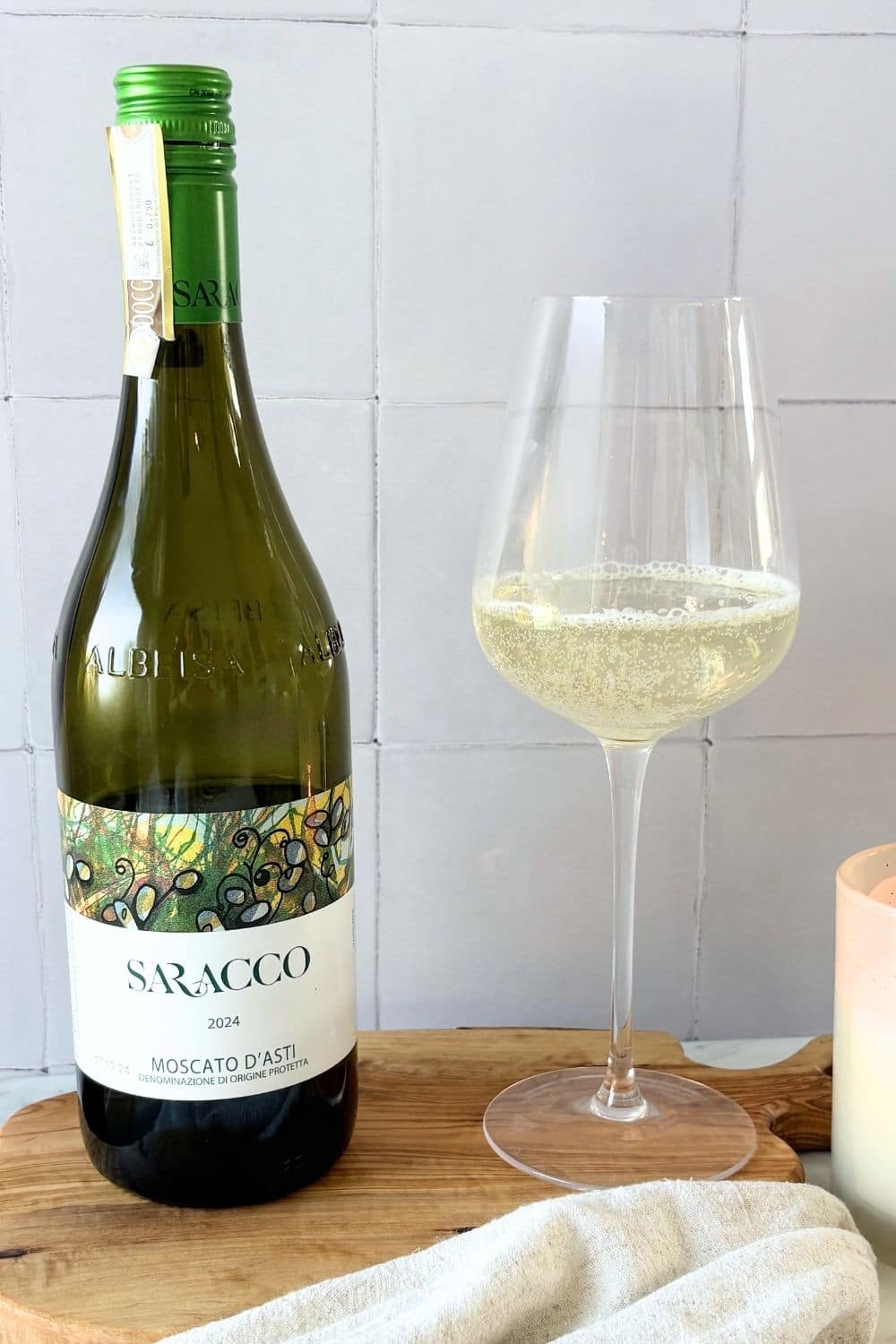
Moscato d’Asti is best served cold and opened just before drinking.
Serving tips:
- Temperature: 40–45°F
- Glass: White wine glass or flute
- Open before serving: Just before pouring
- Decanting: Not needed
- Lasts after opening: About 1 day in the refrigerator with a stopper
Because the bubbles are gentle, it is best enjoyed soon after opening.
When to Open a Bottle of Moscato d’Asti
Moscato d’Asti is a good choice when you want something festive but not heavy. It works beautifully for dessert, brunch, showers, afternoon gatherings, or any moment when a full-strength sparkling wine feels like too much.
If you are serving olive oil cake, fruit dessert, or something citrus-forward, Moscato d’Asti is often an easy and reliable match.