What Does Dry Wine Mean?
If you’ve ever looked at a wine list or recipe and wondered what “dry wine” actually means, you’re not alone.
It’s one of the most commonly used wine terms, but also one of the most misunderstood.
Many people assume dry means sharp, bitter, or lacking flavor. In reality, dry wine refers to sweetness, not quality or intensity.
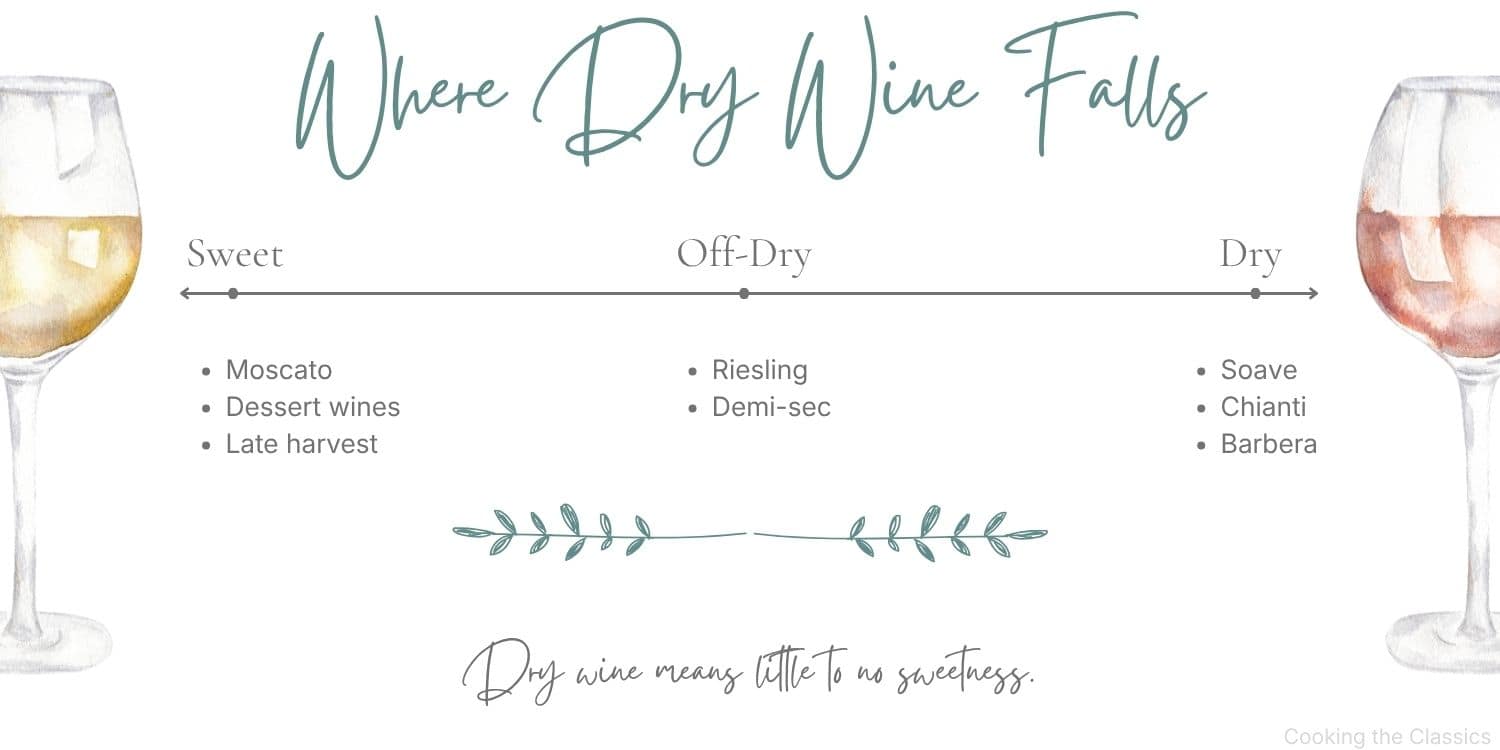
A dry wine has little to no residual sugar left after fermentation. In simpler terms, it is a wine that does not taste sweet.
Understanding that one term makes buying wine much easier, especially when choosing bottles for dinner or pairing wine with food.
What Does Dry Mean in Wine?
During fermentation, yeast converts grape sugar into alcohol. If most or all of that sugar is fermented, the finished wine tastes dry.
That means dry wines are typically crisp, clean, and balanced rather than sugary or dessert-like.
Dry does not mean:
- Sour
- Bitter
- Strong
- Low quality
- Harsh
It simply means the wine has very little sweetness.
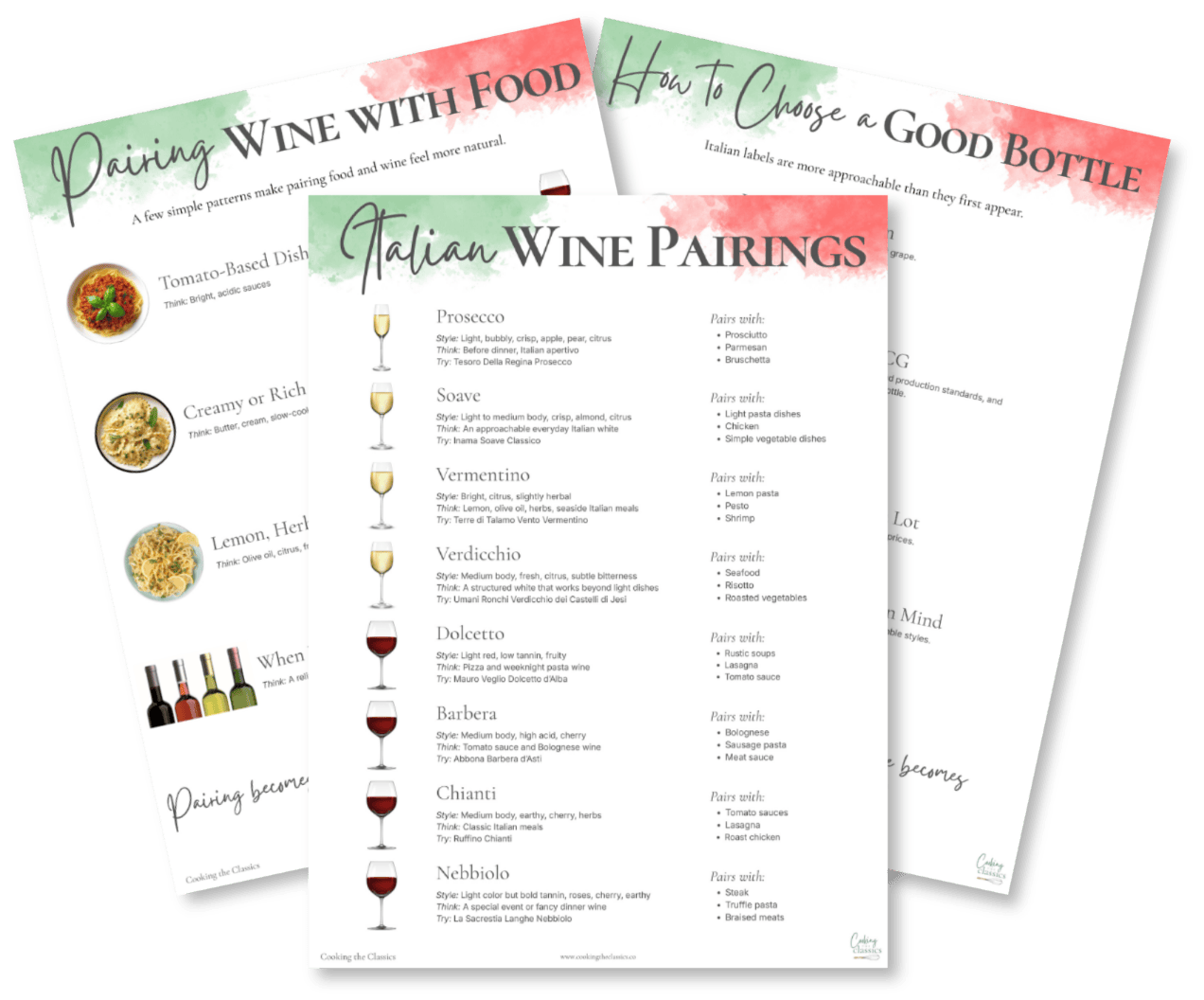
For a closer look at pairing Italian wines with food, choosing bottles confidently, and key label terms to know, download the Italian Wine Pairing Guide to keep on hand while cooking or shopping.
Why Dry Wine Matters with Food
Dry wines are often the easiest wines to pair with meals because they refresh the palate instead of competing with the food.
That is one reason many classic European table wines are dry. They are made to be enjoyed alongside dinner.
A dry white wine can lift seafood, roast chicken, vegetables, and lighter pasta dishes. A dry red wine can complement tomato sauces, braised meats, mushrooms, and aged cheeses.
For a food-focused kitchen, dry wines are often the most versatile bottles to keep on hand.
Common Dry White Wines
If you enjoy fresh, crisp wines with meals, these are good places to start:
- Sauvignon Blanc – lively and herbaceous
- Vermentino – citrusy, bright, excellent with seafood and chicken
- Soave – gentle, balanced, useful with many weeknight meals
- Pinot Grigio – light and clean
Is Dry Wine Better?
Not necessarily. It depends on what you enjoy and what you are serving.
Dry wines are popular because they are flexible at the table and often pair naturally with savory foods. Sweeter wines have their place as well, especially with spice, dessert, or casual sipping.
The better question is not whether dry wine is better, but whether it suits the meal.
How to Tell if a Wine Is Dry
Labels do not always say “dry,” so a little familiarity helps.
As a general rule:
- Most everyday table reds are dry.
- Many classic European whites are dry.
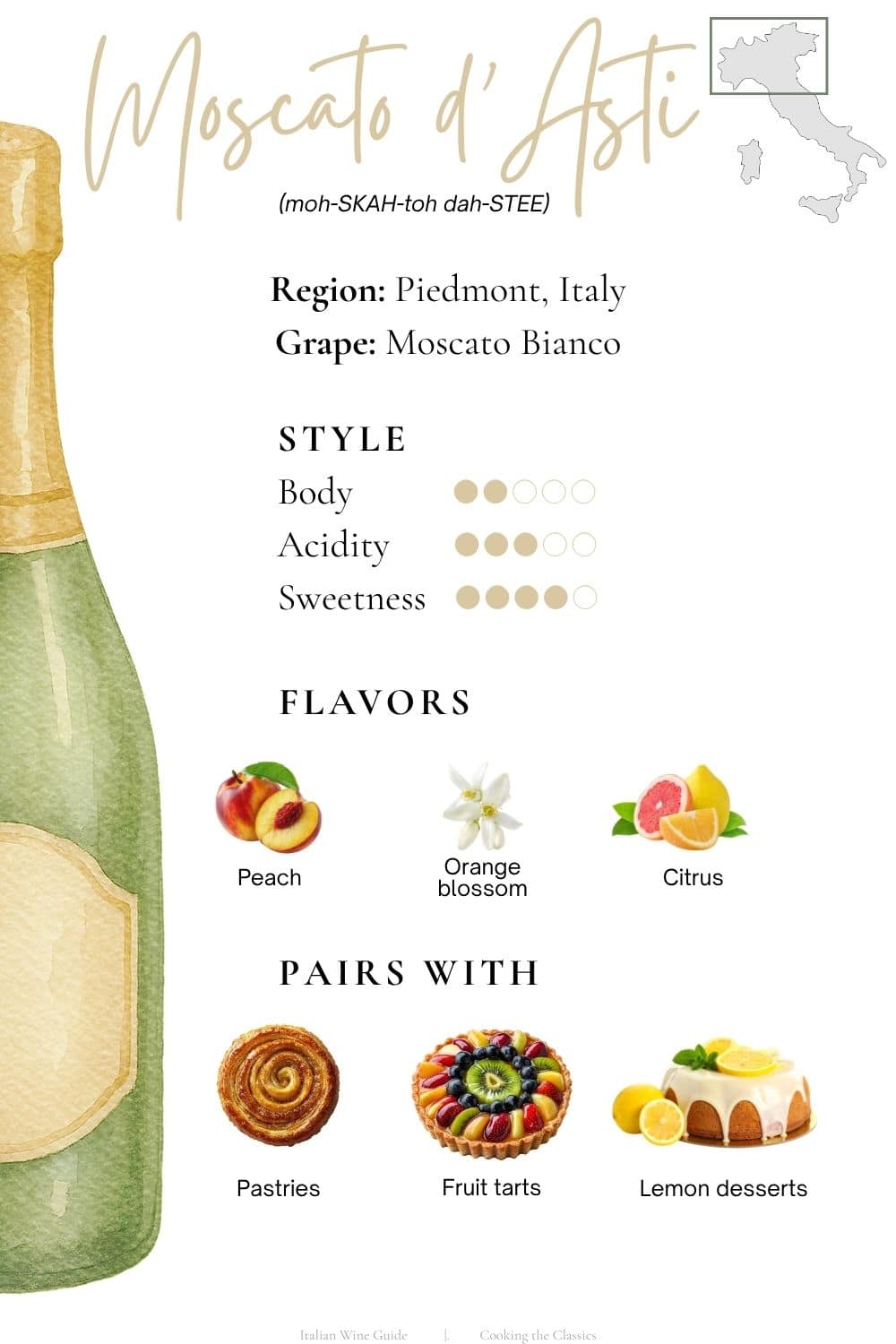
- Wines labeled dessert, late harvest, Moscato, demi-sec, or sweet usually indicate a wine with some sweetness.
When in doubt, a quick search or asking the wine shop can help.
Dry Wine for Italian Cooking
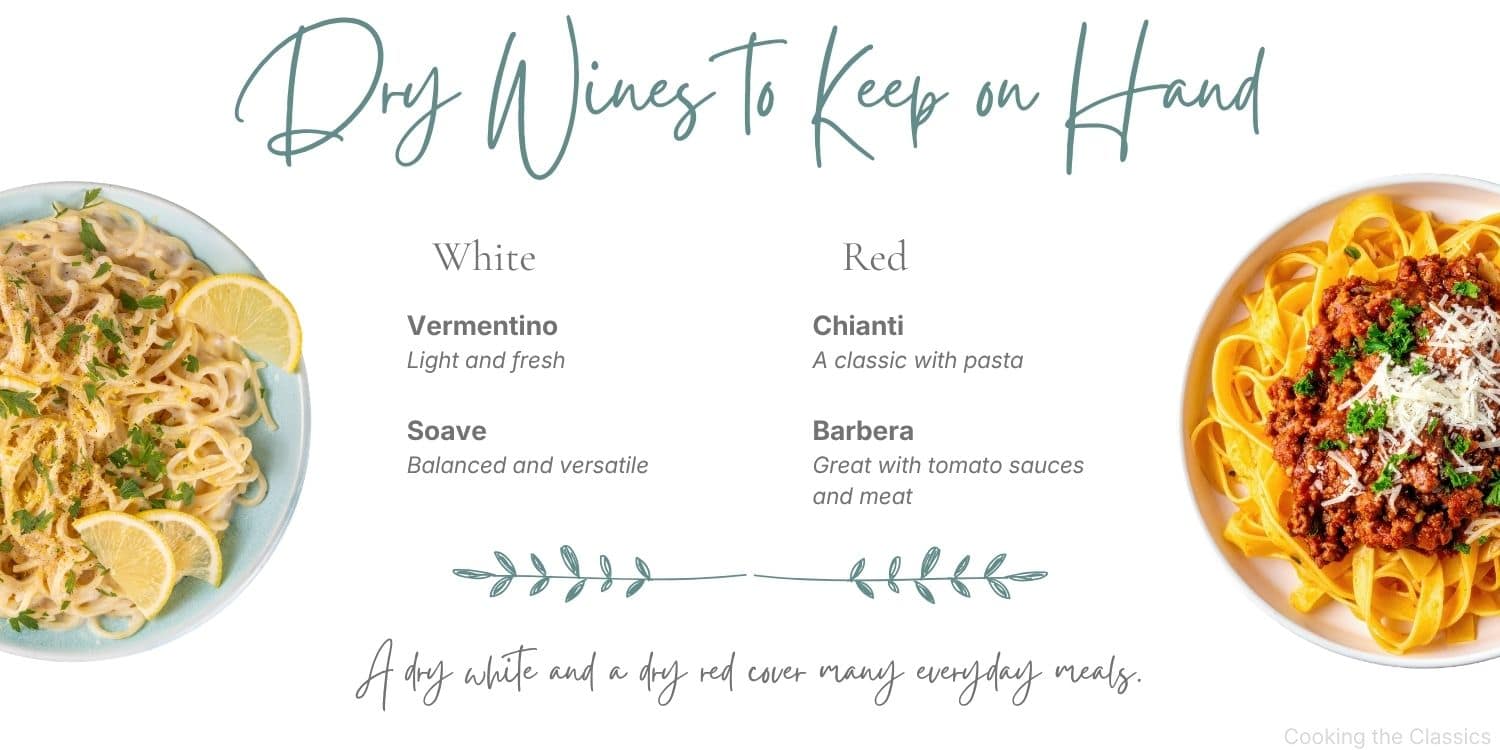
If you cook often, keeping one dry white and one dry red on hand covers many meals.
A bottle of Soave or Vermentino works well with chicken, fish, vegetables, and lighter sauces.
A bottle of Chianti or Barbera works beautifully with pasta, tomatoes, sausage, and braised dishes.
These are wines made with food in mind.
Simply stated, dry wine is wine that does not taste sweet.
It’s a helpful term to understand because it comes up often, whether you are choosing a bottle at the store, looking over a wine list, or deciding what to serve with dinner.
For everyday meals, dry wines are often an easy choice because they pair well with food and work with many different dishes.