Chianti Wine Guide
Getting to Know Chianti
Chianti is one of the most recognizable Italian wines and one of the easiest to pair with food. It comes from Tuscany in central Italy and is made from the Sangiovese grape. If you’ve ever had a red wine with pasta and tomato sauce at an Italian restaurant, there’s a good chance it was Chianti.
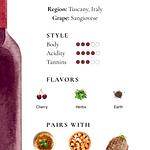
It is known for its bright acidity, moderate tannins, and flavors of cherry, dried herbs, and sometimes leather or earth. It’s a very food-friendly wine and works especially well with tomato-based dishes, roasted meats, and aged cheeses.
Chianti and Tuscany
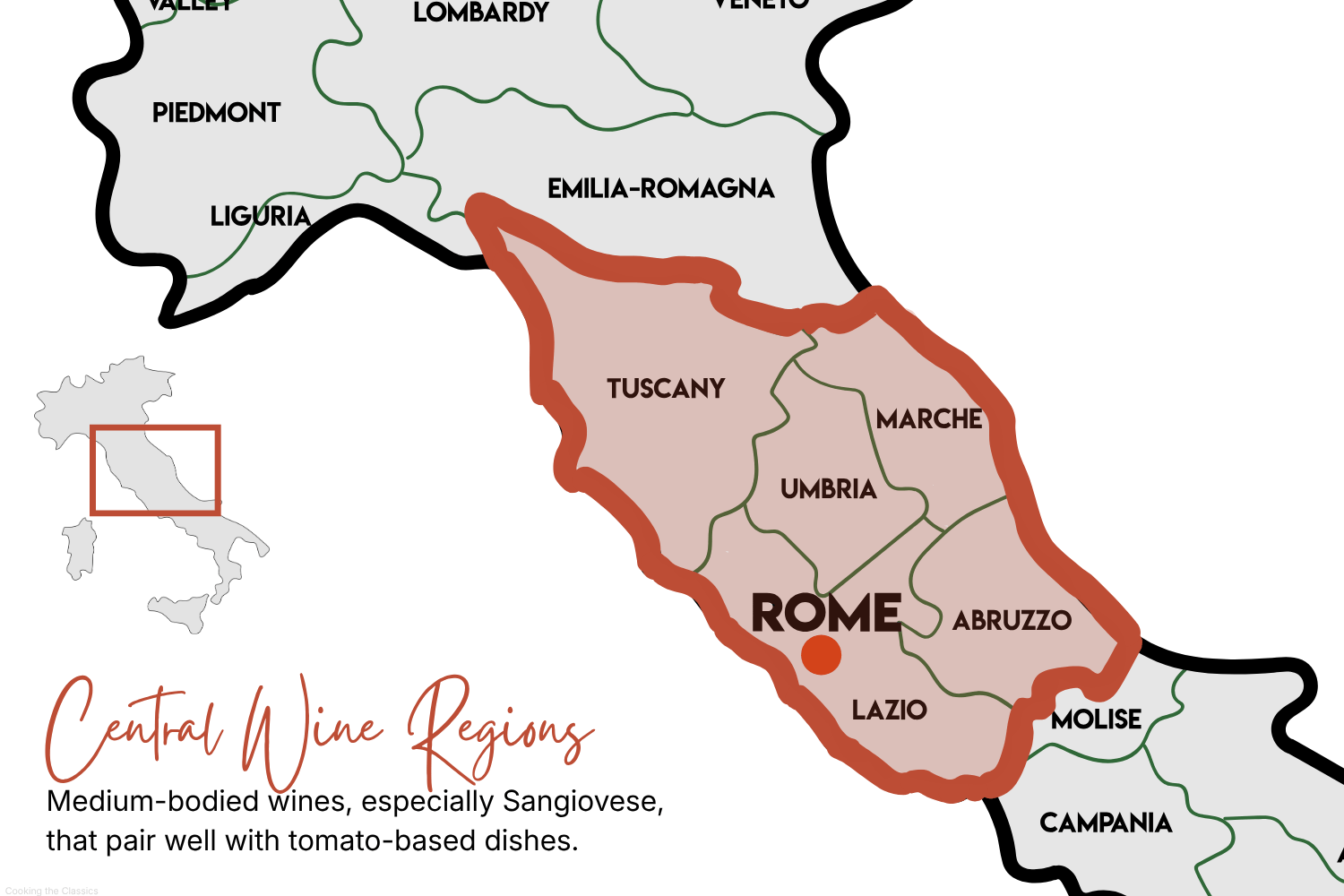
Chianti comes from Tuscany, a region in central Italy known for rolling hills, olive trees, and vineyards. Within Tuscany, there are several Chianti zones, but the two most common you’ll see are:
- Chianti DOCG
- Chianti Classico DOCG
Chianti Classico is generally considered higher quality and comes from the historic Chianti region between Florence and Siena. These bottles usually have a black rooster (Gallo Nero) on the neck label.
All Chianti wines must be made mostly from Sangiovese grapes, which are responsible for the wine’s acidity and cherry flavor.
The Taste and Style of Chianti
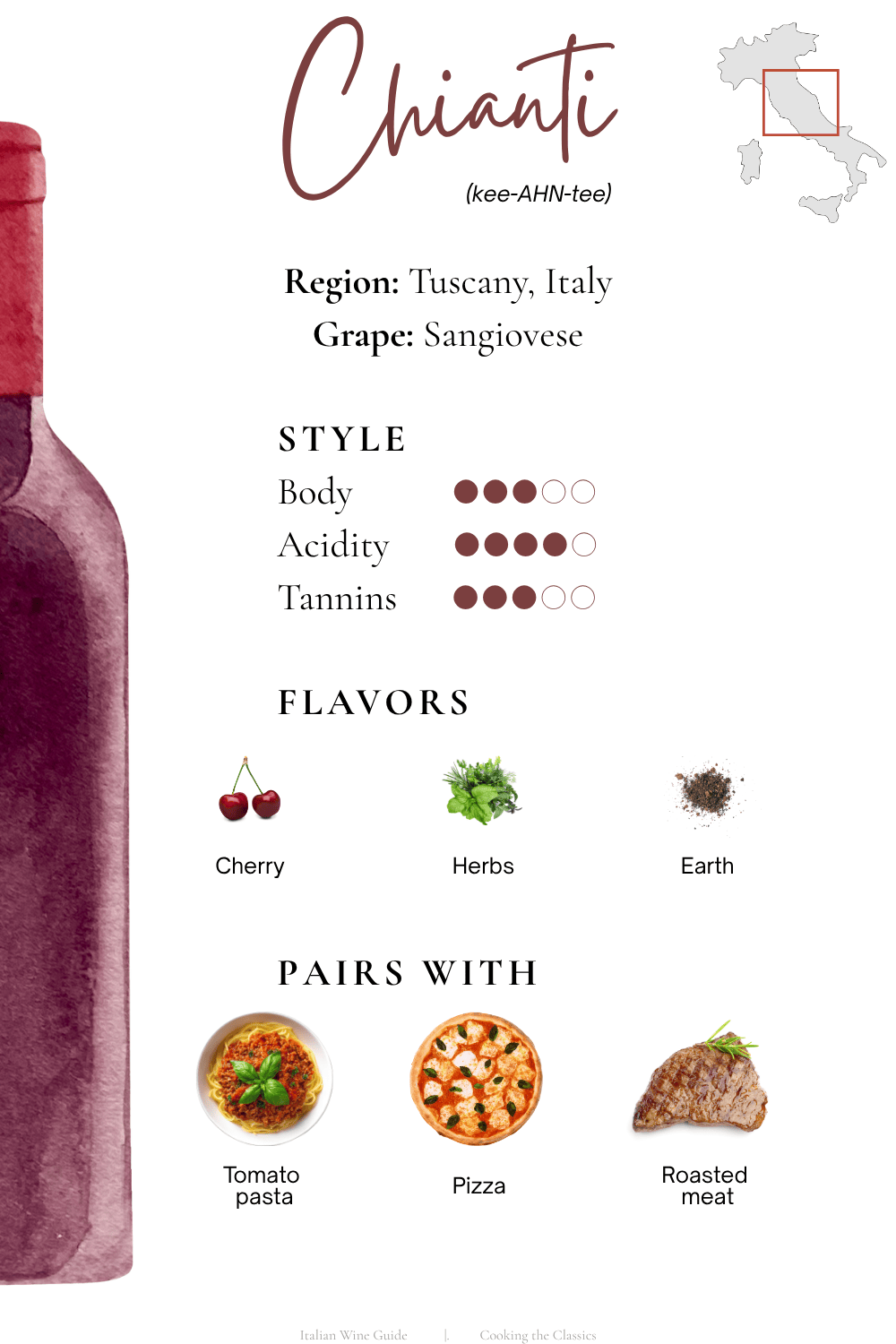
Chianti is typically a medium-bodied red wine with noticeable acidity and light to moderate tannins.
Common tasting notes:
- Cherry
- Tart red berries
- Dried oregano or herbs
- Earth
- Leather
- Sometimes a little spice or tobacco
You can think of it as sitting somewhere between Pinot Noir and Cabernet Sauvignon. It has more structure than Pinot Noir, but it’s not as heavy or bold as Cabernet.
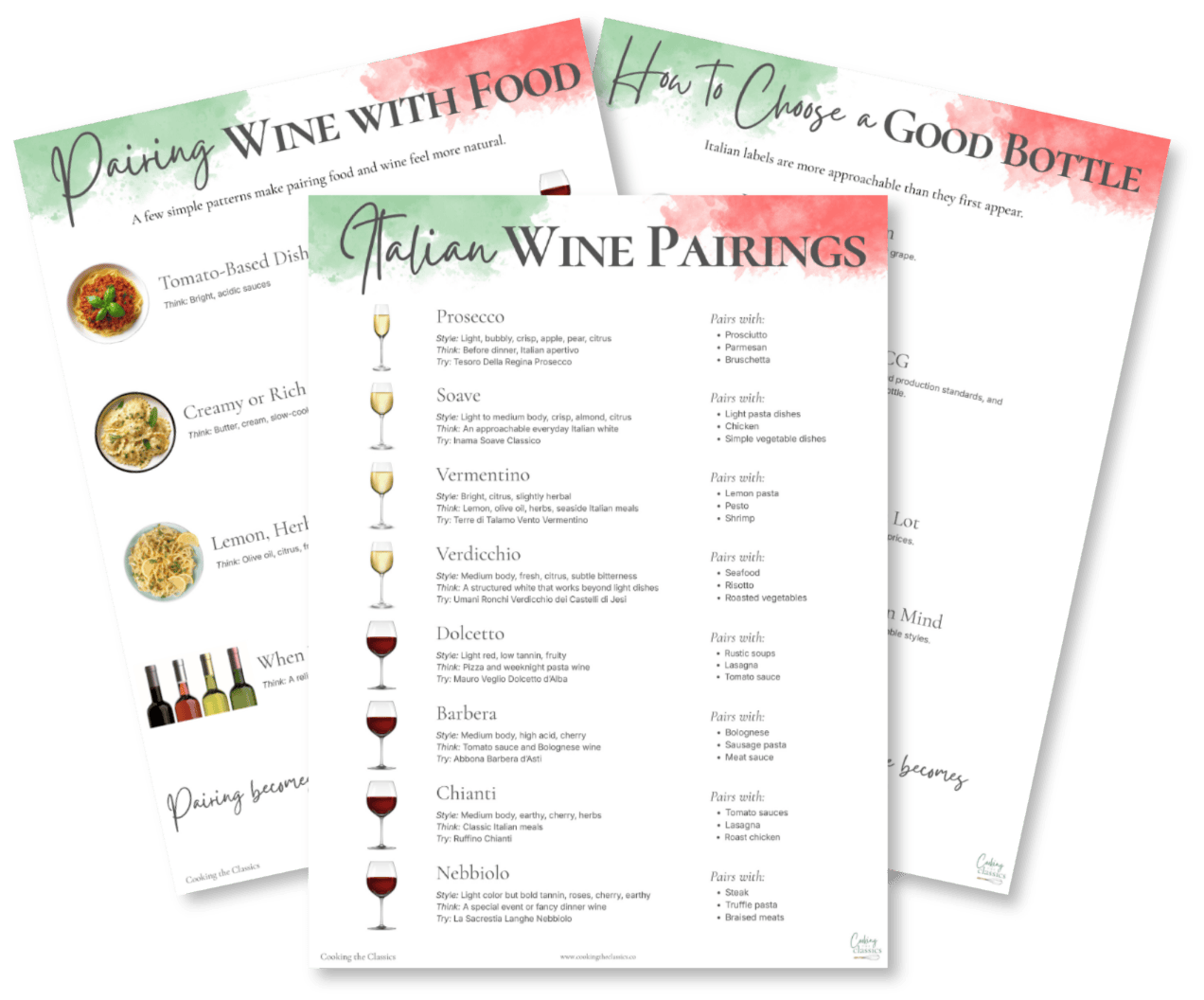
For a closer look at pairing Italian wines with food and how to read the label, download the Italian Wine Pairing Guide to keep on hand while cooking or shopping.
Chianti vs. Chianti Classico
Both Chianti and Chianti Classico are good wines, but they’re usually used for slightly different kinds of meals. Chianti is great for everyday pasta dinners, while Chianti Classico is nice for heartier meals or when you want something a little more special.
Chianti
- Larger production area
- Usually lighter and more everyday drinking
- Often less expensive
Chianti Classico
- Smaller historic region
- Often more complex and structured
- Usually a little more expensive
- Look for the black rooster label
What to Eat with Chianti
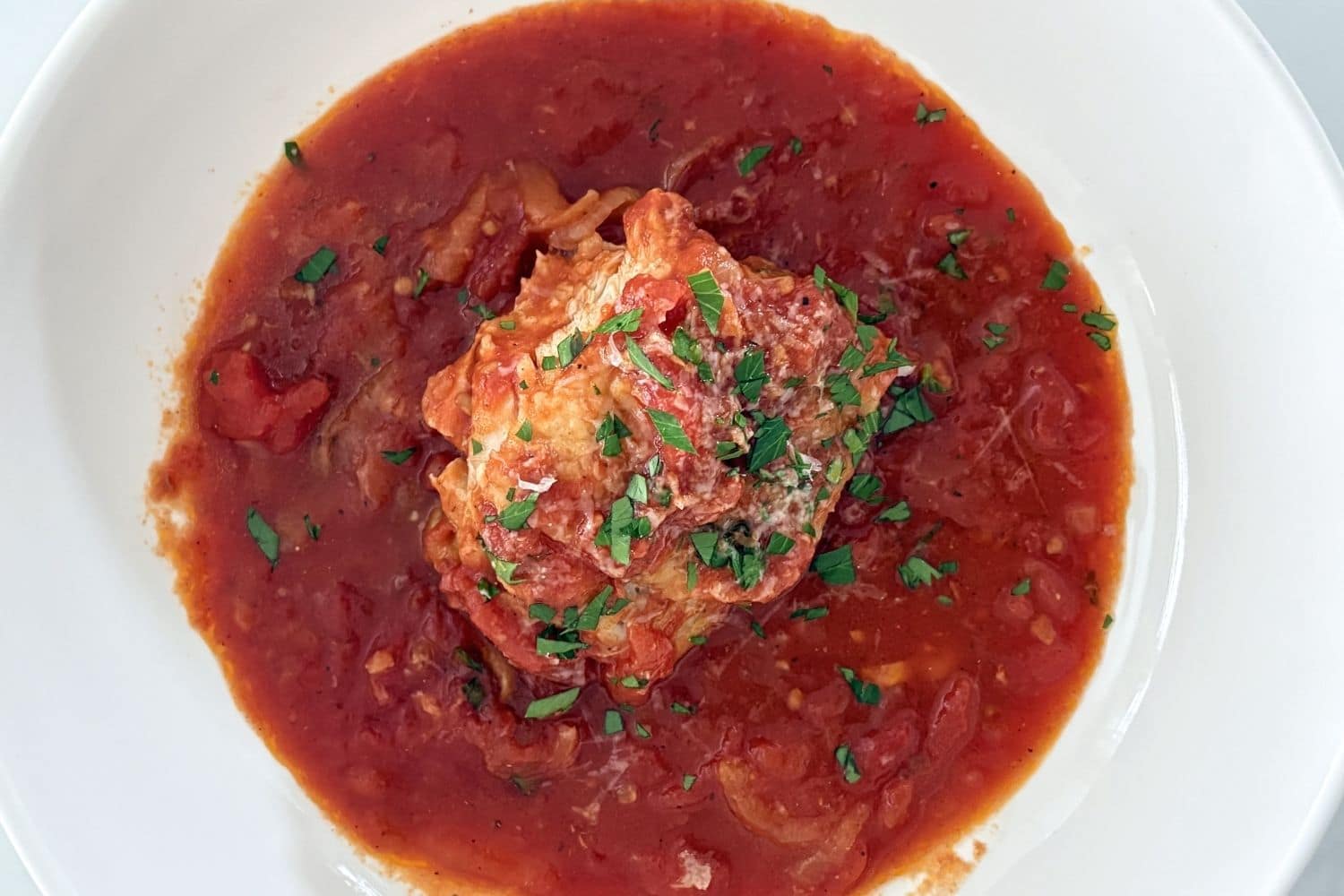
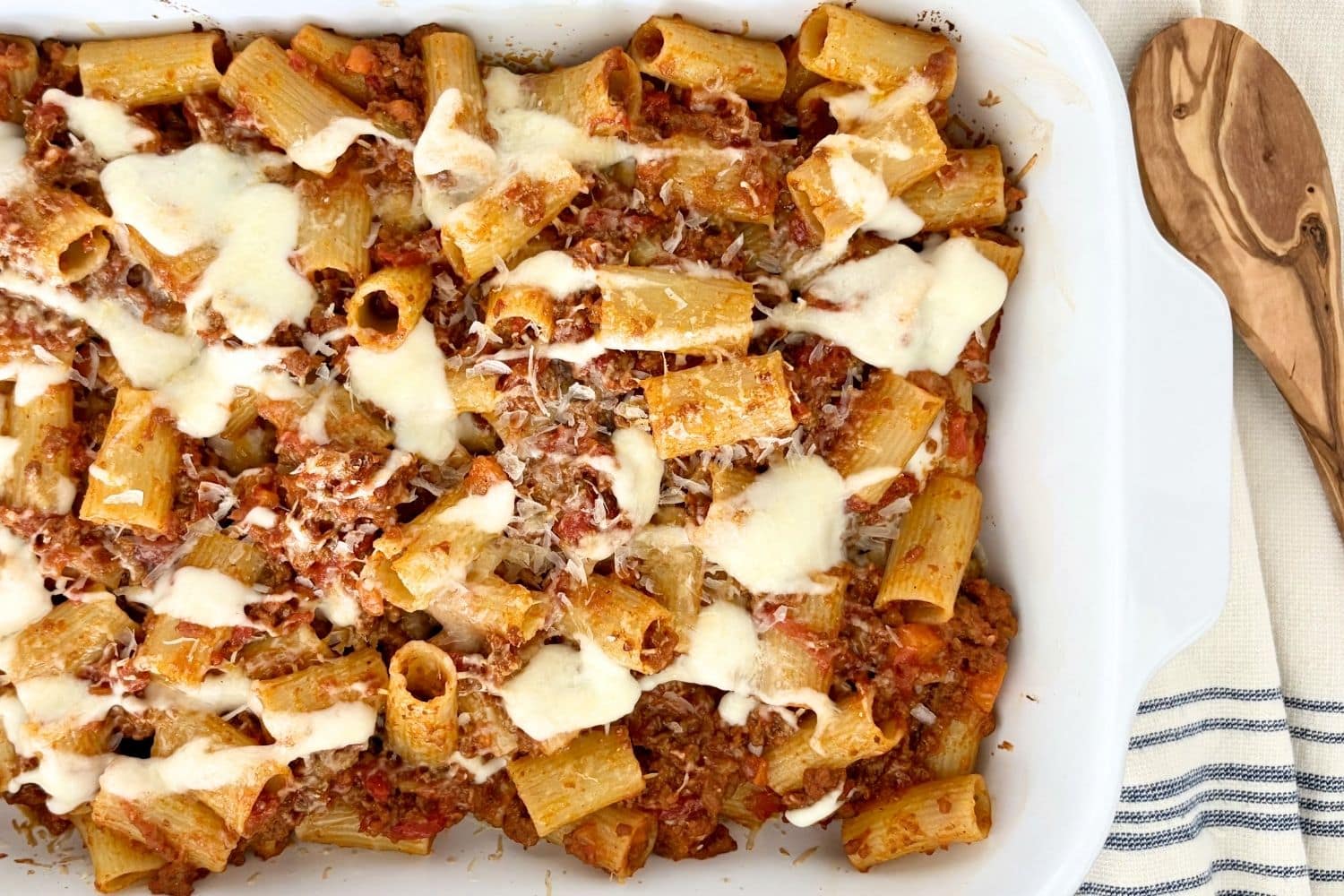
Chianti is one of the easiest wines to pair with Italian food because its acidity matches tomato-based sauces really well.
If a dish has tomatoes, herbs, garlic, olive oil, or slow-cooked meat, Chianti is usually a very good place to start.
Choosing Chianti
When shopping, look for Chianti or Chianti Classico on the label. Both are widely available, but they’re usually used for slightly different kinds of meals.
Chianti Classico comes from a smaller, historic region and is often a little more structured and complex. You can usually recognize it by the black rooster (Gallo Nero) on the neck label. Regular Chianti is often lighter and works well as an everyday wine.
Most bottles are easy to find and reasonably priced, often between $12–25, which makes it a good red wine to keep on hand for pasta and tomato-based dishes.
Some producers you’ll often see:
- Ruffino
- Banfi
- Rocca delle Macìe
- Castello di Ama
- Santa Margherita
If you’re cooking something with tomato sauce or herbs, Chianti is usually a reliable place to start.
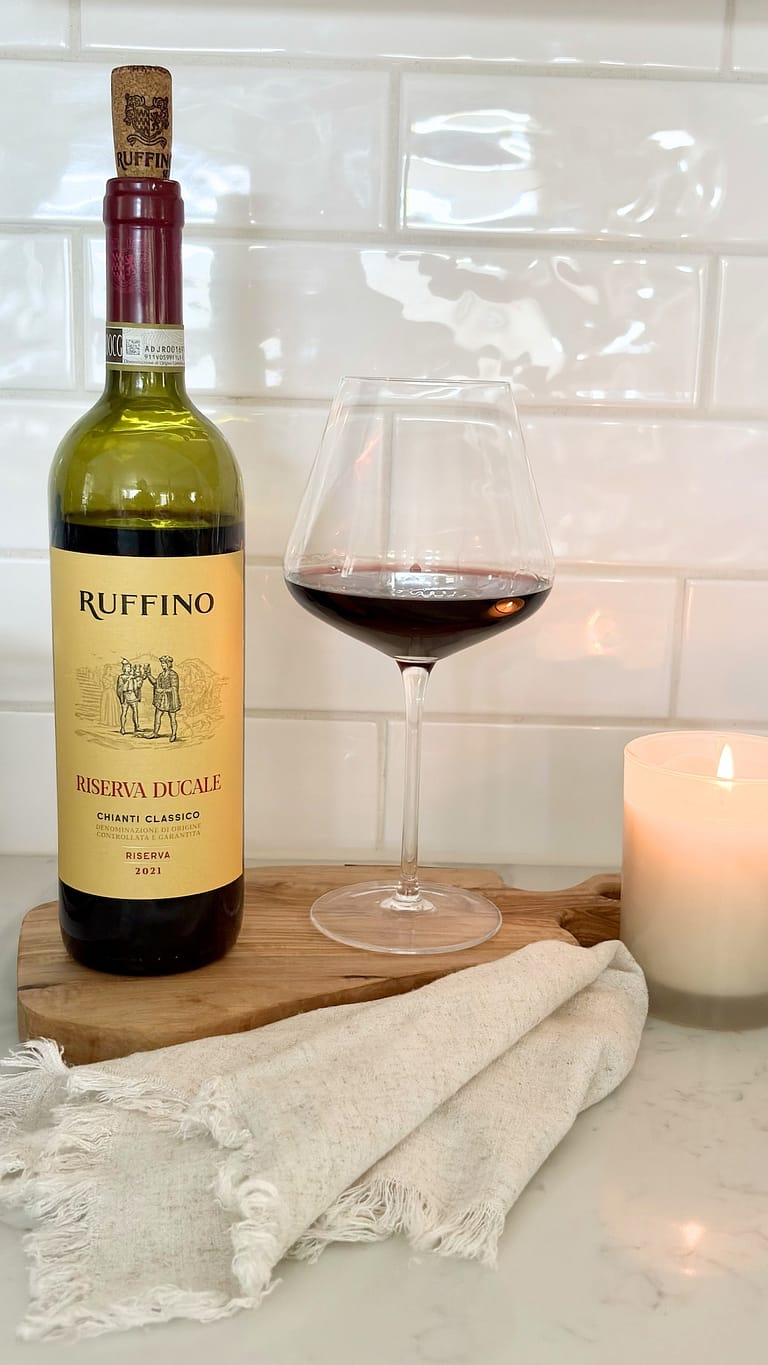
Serving Chianti
Chianti is best served slightly cooler than room temperature. If your house is warm, you can put the bottle in the refrigerator for about 20–30 minutes before serving.
Serving tips:
- Temperature: 60–65°F
- Glass: Standard red wine glass
- Open before serving: 15–20 minutes
- Lasts after opening: About 2–3 days in the refrigerator
If the wine tastes too sharp, it may be too cold. If it tastes flat or overly alcoholic, it may be too warm.
When to Open a Bottle of Chianti
Chianti is a good wine to open when you’re making classic Italian food, especially anything with tomato sauce, herbs, or slow-cooked meat. It’s one of the most useful Italian red wines to keep around because it works with so many everyday meals, from simple pasta to baked dishes and roasted meats.
If you’re not sure what wine to buy for an Italian dinner, it is usually a very safe choice. It’s affordable, easy to find, and made to be enjoyed with food, which is exactly how it’s used in Italy.