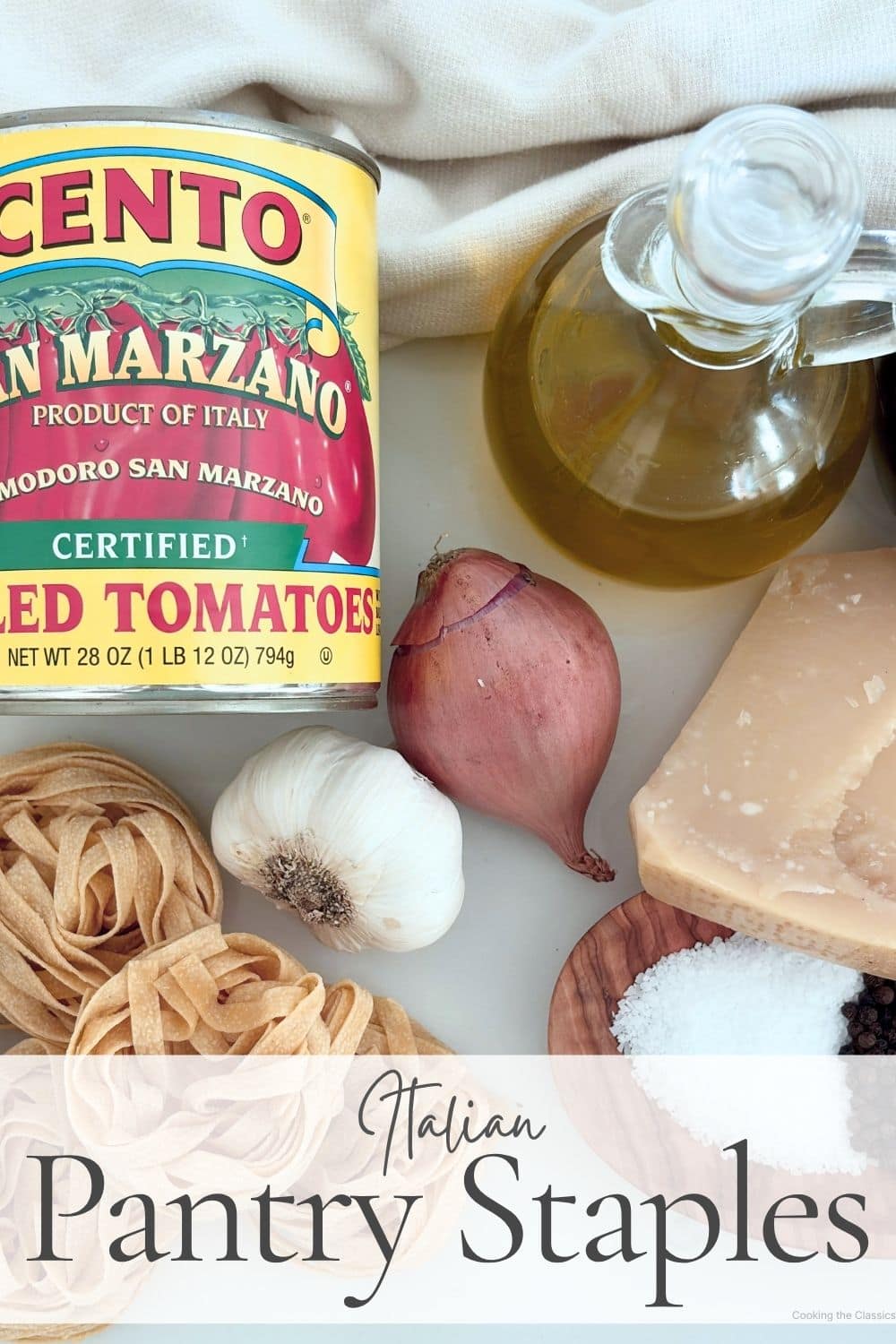
Italian Pantry Staples
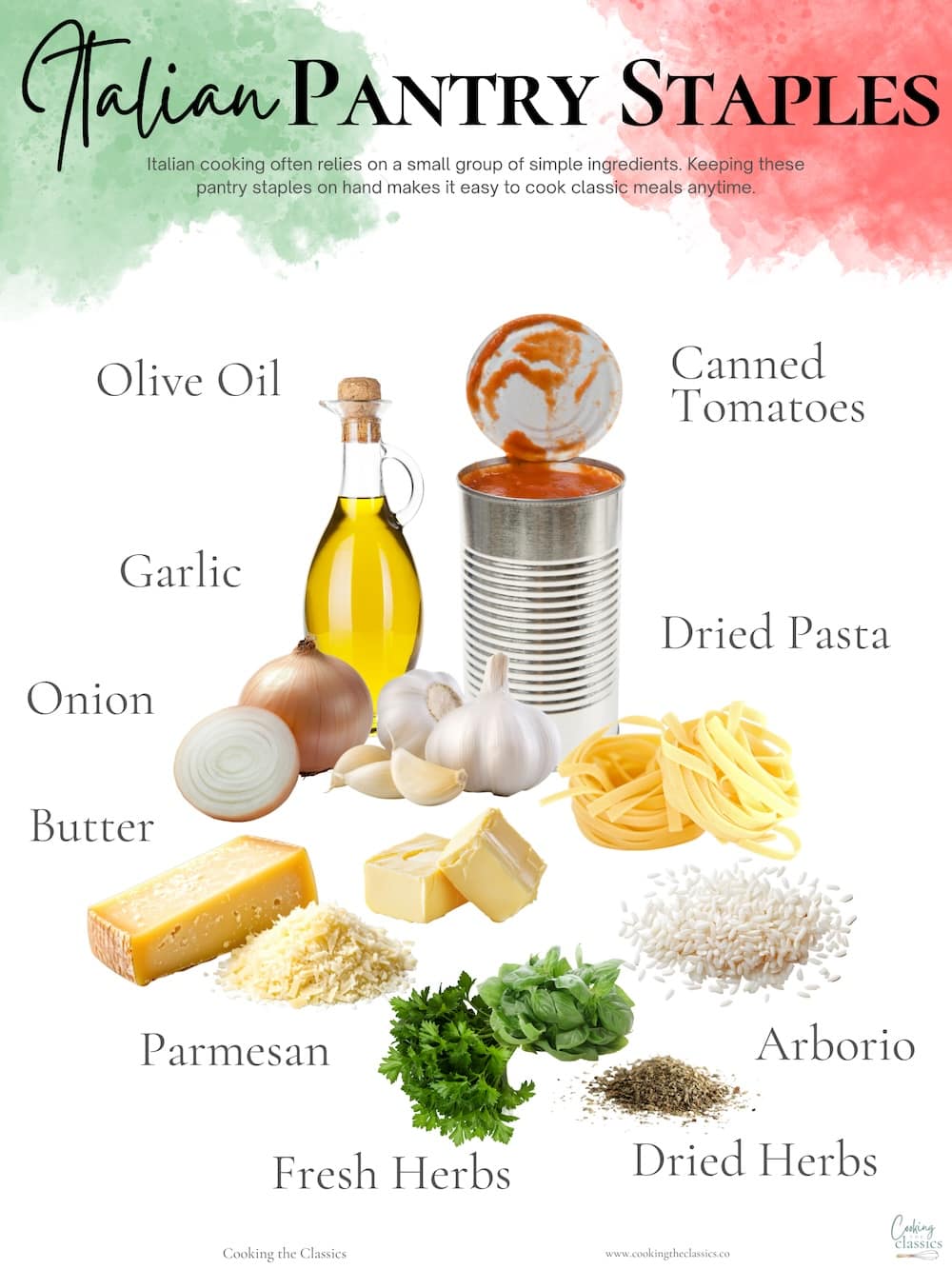
Italian cooking often starts with a dependable set of ingredients.
When those basics are already in your kitchen, everyday cooking becomes much easier.
Olive oil, tomatoes, pasta, cheese, rice, and a few aromatics can be combined in countless ways to make sauces, soups, risotto, and simple meals without much advance planning.
This guide covers what to keep on hand and why these ingredients matter.
The Foundation of an Italian Pantry
You don’t need a large pantry to cook well. A smaller collection of reliable ingredients is usually more useful than shelves full of items you rarely use.
With a few essentials in place, you can make dinner from what you already have instead of starting from scratch each time. That is part of what makes Italian home cooking so practical.
Many classic dishes rely on the same ingredients, used differently depending on the season, the meal, or what is available.
Italian Pantry Staples
Many of these ingredients last a long time, which makes them easy to keep on hand without much effort.
Once your pantry is stocked, cooking becomes less about planning and more about recognizing what you already have. The same core ingredients show up again and again, whether you are making a quick pasta, a simple soup, or a longer cooked sauce.
Over time, you start to rely on these staples without thinking too much about it. A can of tomatoes, a box of pasta, olive oil, garlic, and a piece of cheese can come together in different ways depending on what you feel like making.
That consistency is part of the appeal. The ingredients remain familiar, while the meals stay varied.
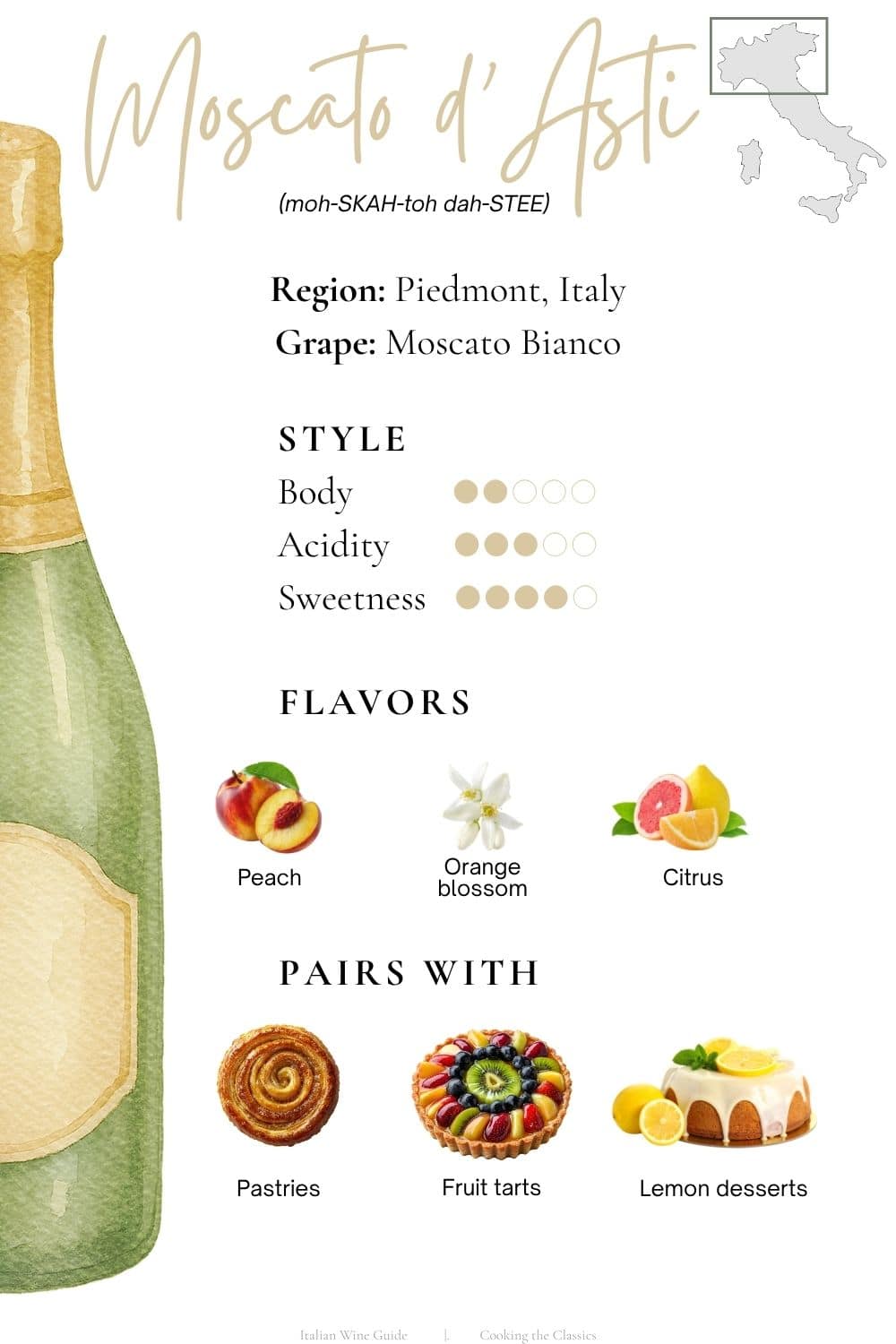
For a closer look at pairing Italian wines with food and how to read the label, download the Italian Wine Pairing Guide to keep on hand while cooking or shopping.

The Core Italian Pantry
Canned Tomatoes
Whole tomatoes tend to have better texture and flavor than pre-diced varieties, and they give you more control over the final sauce.
When shopping, look for San Marzano style whole peeled tomatoes. Brands like Cento are easy to find and work well.
Dried Pasta and Rice
Arborio rice is worth keeping for risotto and can turn a few simple ingredients into something more substantial.
Beans and Broth
If you have it, broth adds depth to soups, risotto, and sauces. Homemade broth is ideal, but even keeping some in the freezer or using a good alternative is helpful.
Olive Oil & Vinegars
Balsamic vinegar and red wine vinegar are the most useful to keep on hand for dressings, vegetables, and simple sauces.
Cheese
Pecorino Romano is another useful cheese, especially for pasta dishes that benefit from a sharper, saltier finish.
Herbs, Garlic & Onions
Garlic and onions are used constantly, while dried oregano and red pepper flakes add depth.
Fresh herbs like parsley and basil bring brightness and can completely change the final dish.
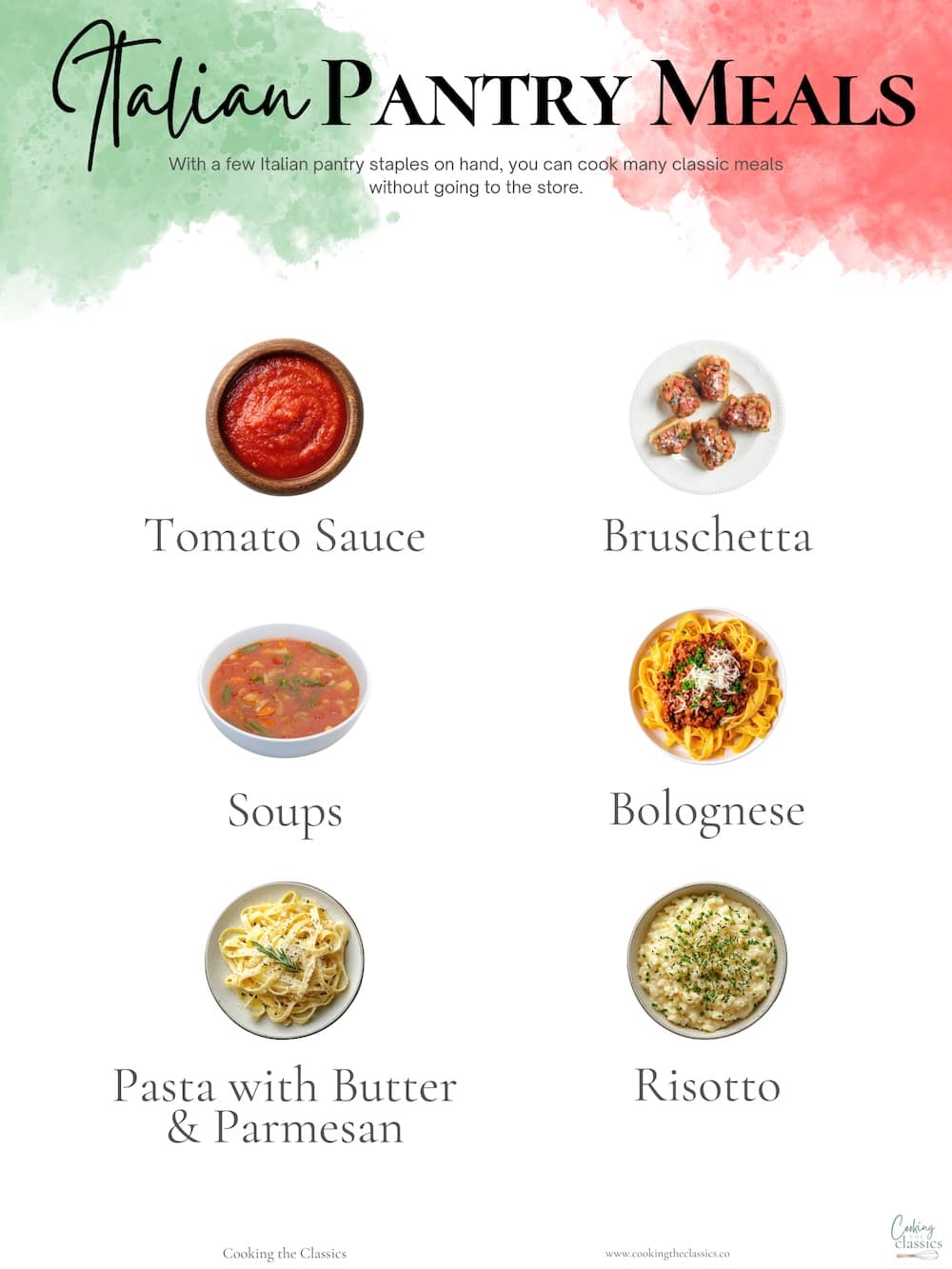
What You Can Cook With Just These Ingredients
Once these ingredients are in place, many classic dishes come together without much planning.
- Tomato sauce
- Pasta with butter and Parmesan
- Arrabbiata sauce
- Risotto
- Bruschetta
- Bolognese
- Tomato soup
- Pasta e Fagioli
Italian cooking often relies less on complicated techniques and more on understanding how to use a small set of ingredients well.
Once your pantry is built, cooking becomes more intuitive. You begin to recognize how often the same ingredients appear, and meals come together more easily over time.
If you are building your pantry, I’ve included the brands I keep on hand below.