Major Wine Regions of Italy
Each region of Italy produces different styles of wine, largely influenced by climate, elevation, and distance from the sea.
Understanding the major wine regions is one of the easiest ways to start learning Italian wine and choosing bottles that pair well with food.
Four Major Wine Regions of Italy
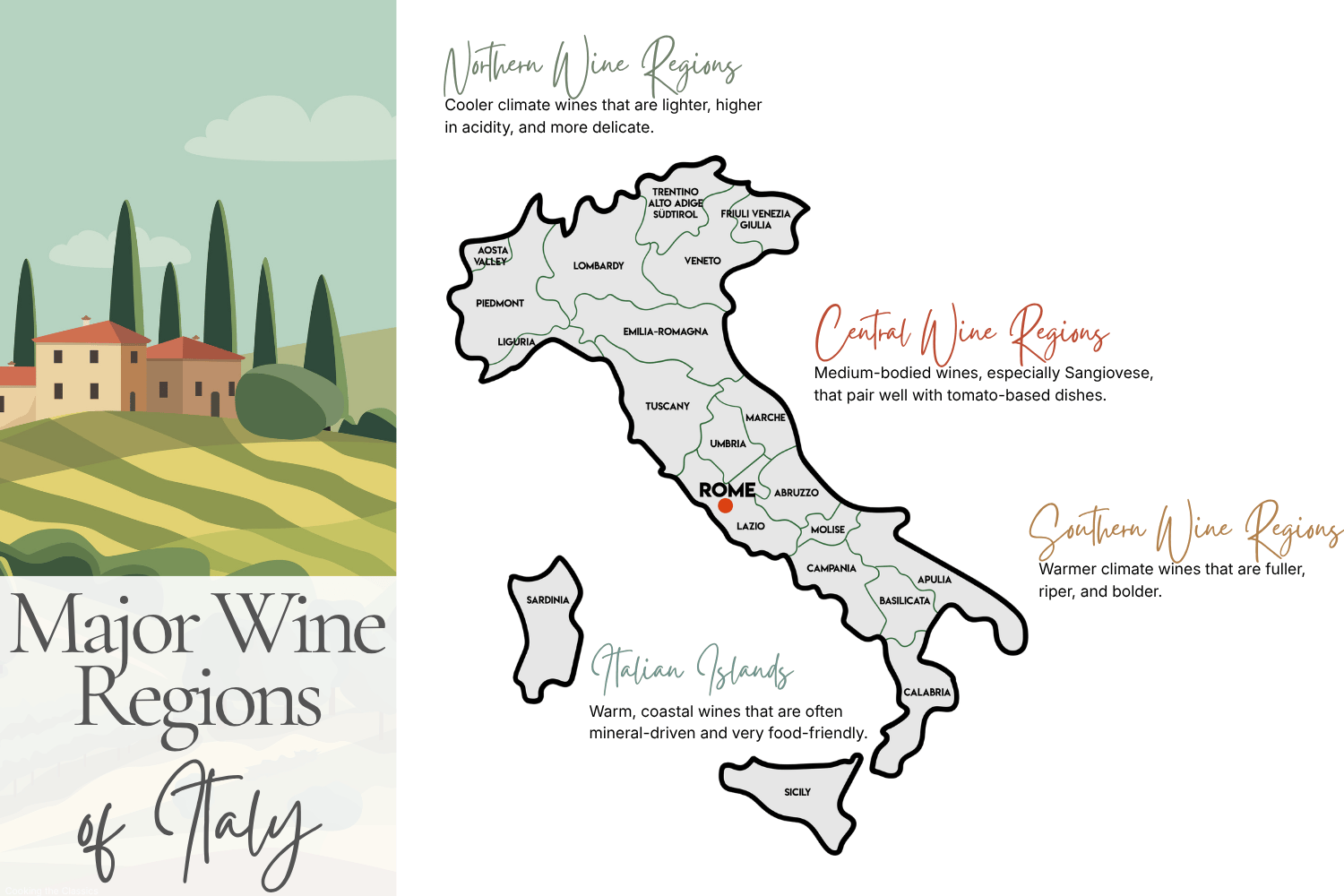
Italy is often divided into four main wine areas: Northern Italy, Central Italy, Southern Italy, and the Italian Islands. Each area has a different climate, which affects how the wines taste.
In general:
- Northern Italy: lighter wines, higher acidity
- Central Italy: medium-bodied wines, especially Sangiovese
- Southern Italy: fuller, riper wines
- Islands: warm climate wines, often mineral-driven
This is one of the simplest ways to start understanding Italian wine.
Northern Italy Wine Regions
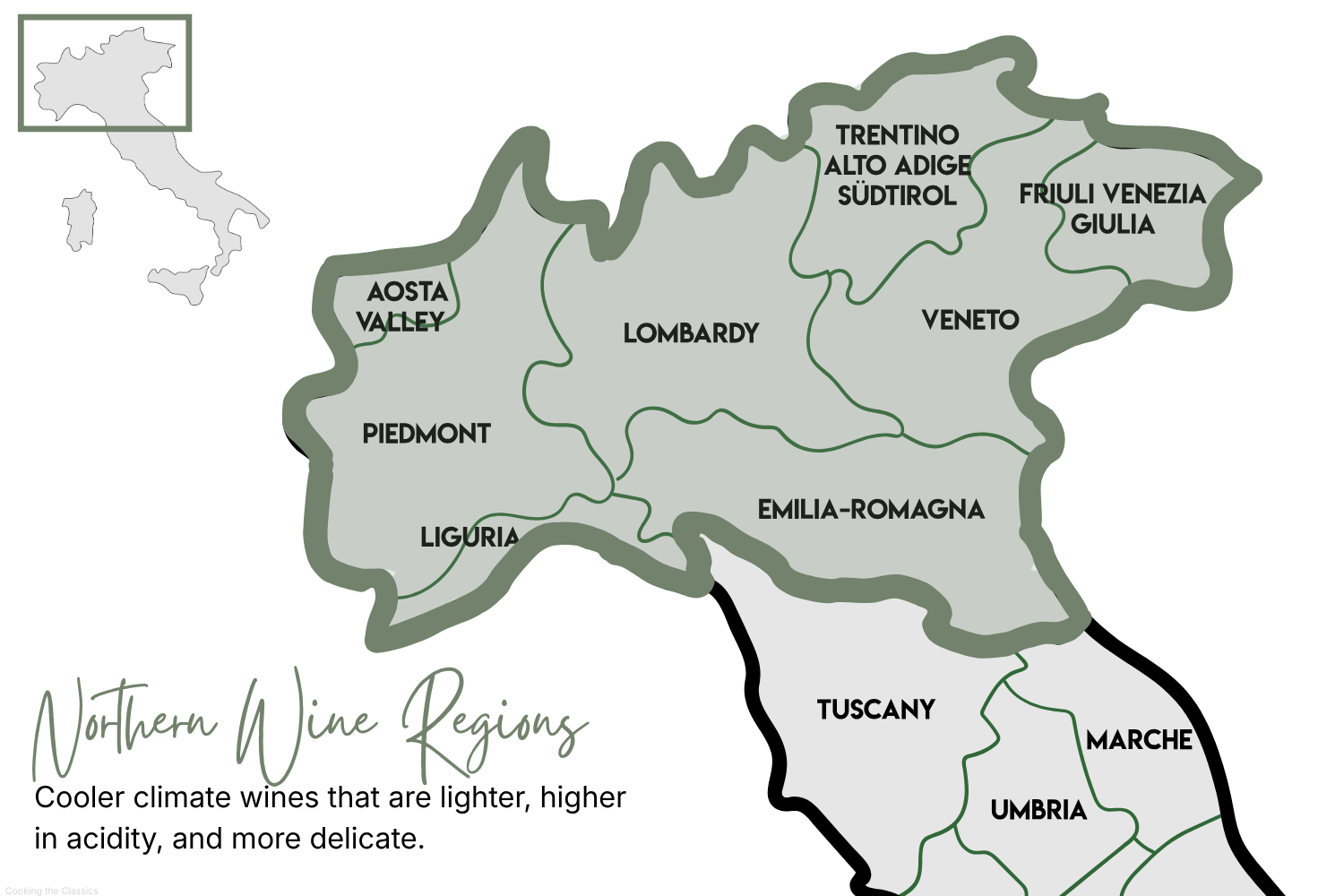
Northern Italy has mountains, lakes, and cooler temperatures, which produce wines that are typically lighter in body with higher acidity and more delicate flavors.
These wines are often very food-friendly and pair well with lighter pasta dishes, risotto, vegetables, and chicken.
Some of the most well-known wine regions in Northern Italy include Piedmont, Veneto, and Friuli Venezia Giulia.
Common Wines from Northern Italy
If you are just starting with Italian wine, many easy-to-find wines come from Northern Italy.
Central Italy Wine Regions
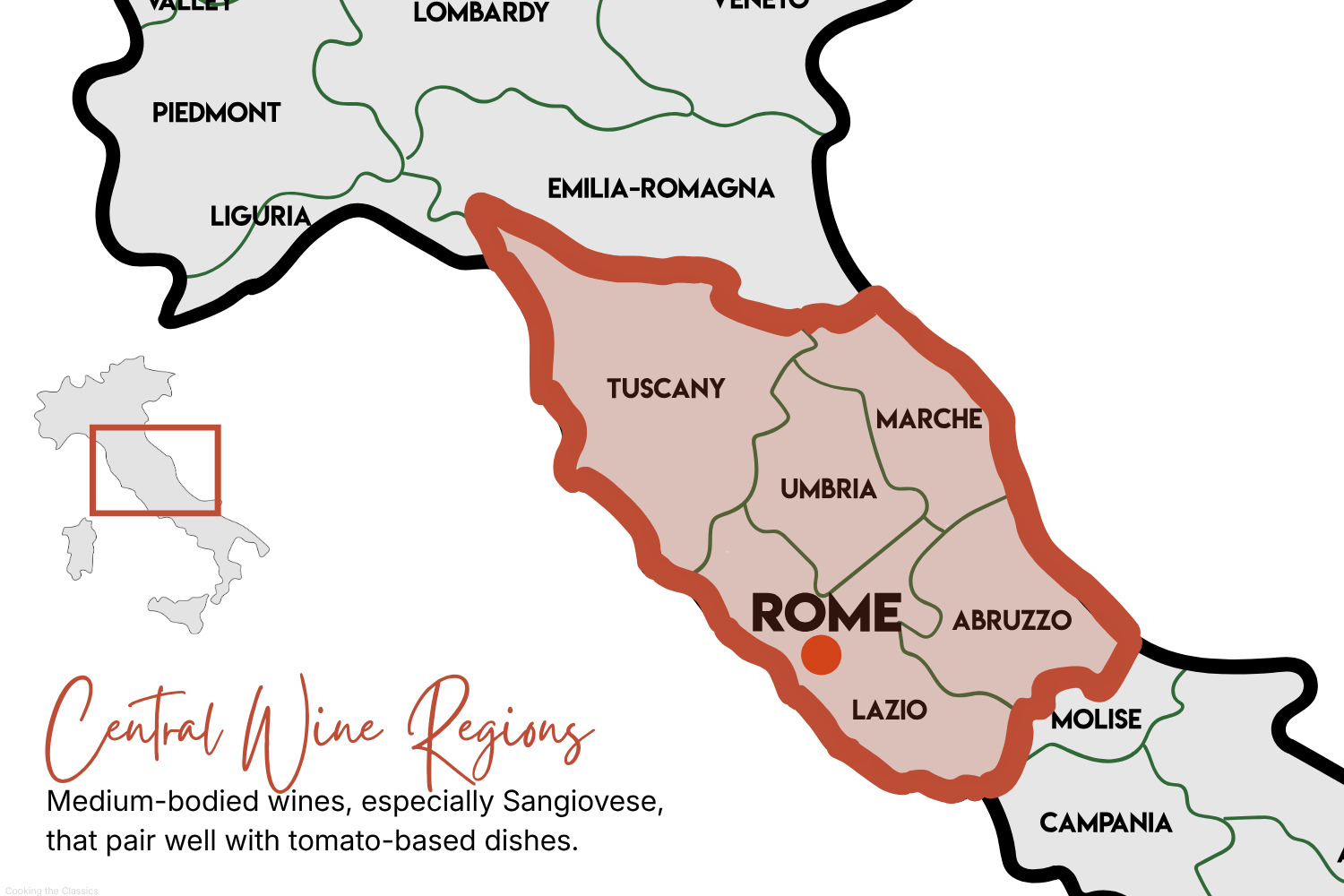
Central Italy is home to Tuscany, one of the most famous wine regions in the world.
The main grape grown here is Sangiovese, which is used to make Chianti, Brunello di Montalcino, and Vino Nobile di Montepulciano.
Wines from Central Italy are usually medium-bodied with bright acidity, which makes them especially good with tomato-based dishes, roasted meats, and traditional pasta dishes.
Common Wines from Central Italy
If you cook Italian food often, you will probably end up drinking a lot of wines from Central Italy because they pair so well with tomato sauce, pasta, and roasted meats.
Southern Italy Wine Regions
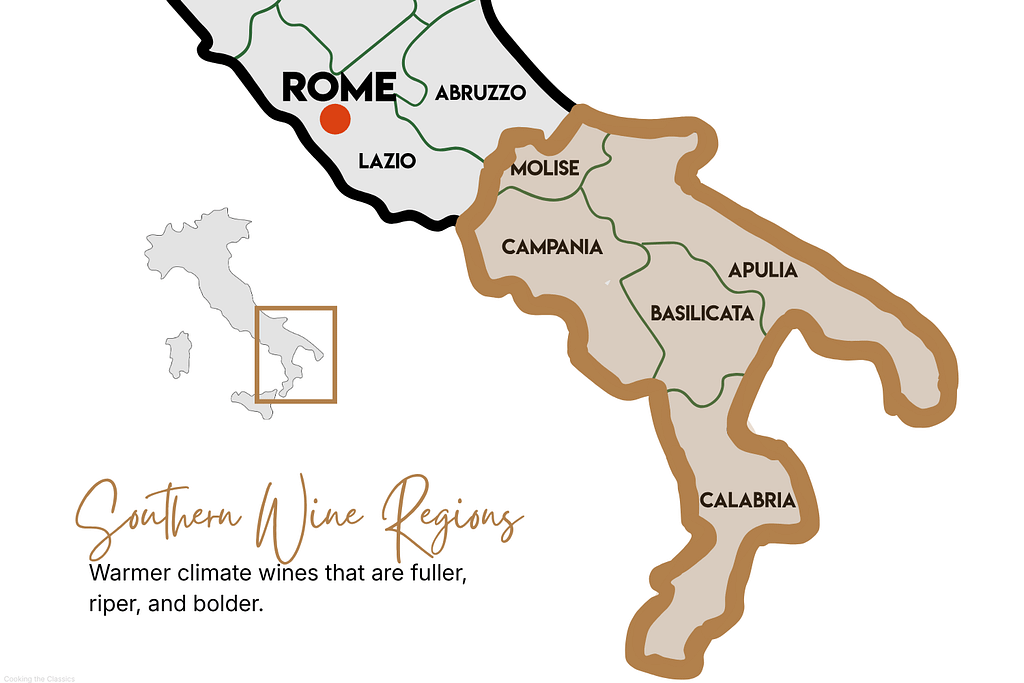
Southern Italy has a warmer climate, which produces wines that are usually fuller-bodied, riper, and bolder.
These wines often pair well with grilled meats, pizza, rich pasta dishes, and stronger flavors.
Some important wine regions in Southern Italy include Campania, Puglia, Basilicata, and Calabria.
Common Wines from Southern Italy
Southern Italian wines are often a great choice when you want something bold but still food-friendly.
Italian Islands
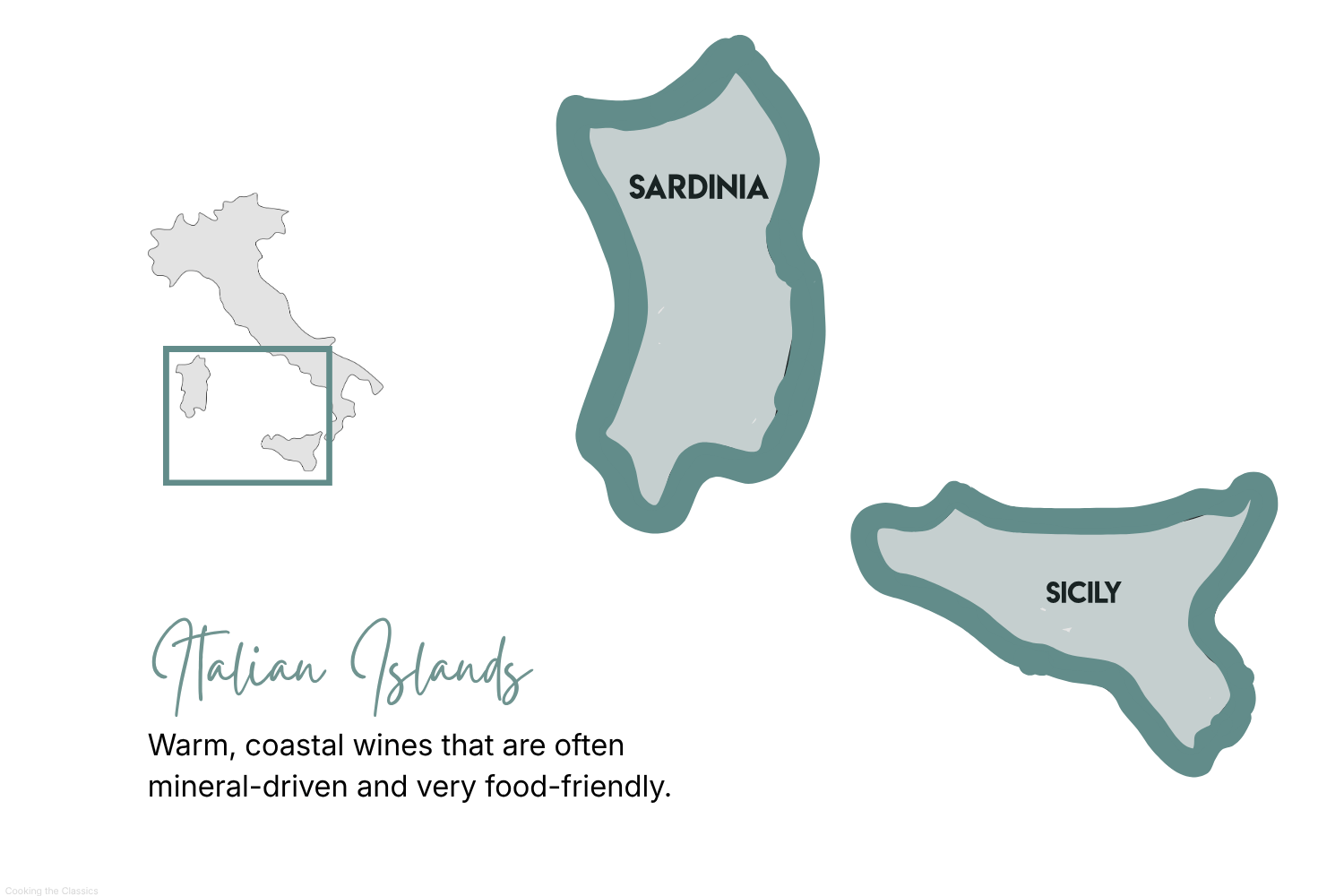
The two main Italian wine islands are Sicily and Sardinia.
These regions have warm climates but also strong coastal and volcanic influences, which often produce wines that are mineral-driven and great with food, especially seafood, vegetables, and Mediterranean-style dishes.
Common Wines from the Italian Islands
Island wines are often some of the best choices for seafood, roasted vegetables, olive oil–based dishes, and lighter pasta dishes.
How to Start Learning Italian Wine
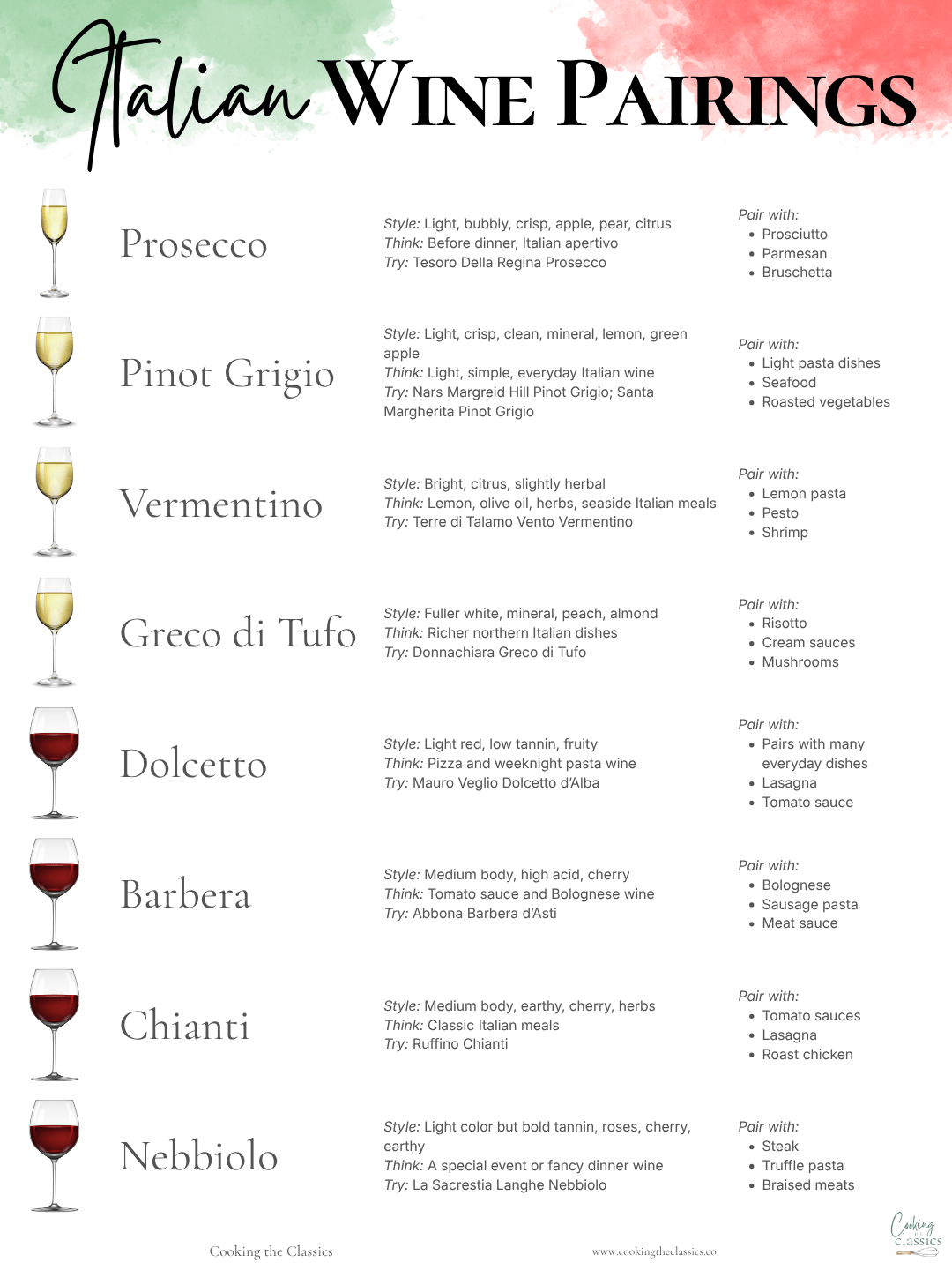
The easiest way to start learning Italian wine is not by memorizing every grape, but by learning a few regions and trying wines from each one.
A simple starting list could be:
- Chianti (Central Italy)
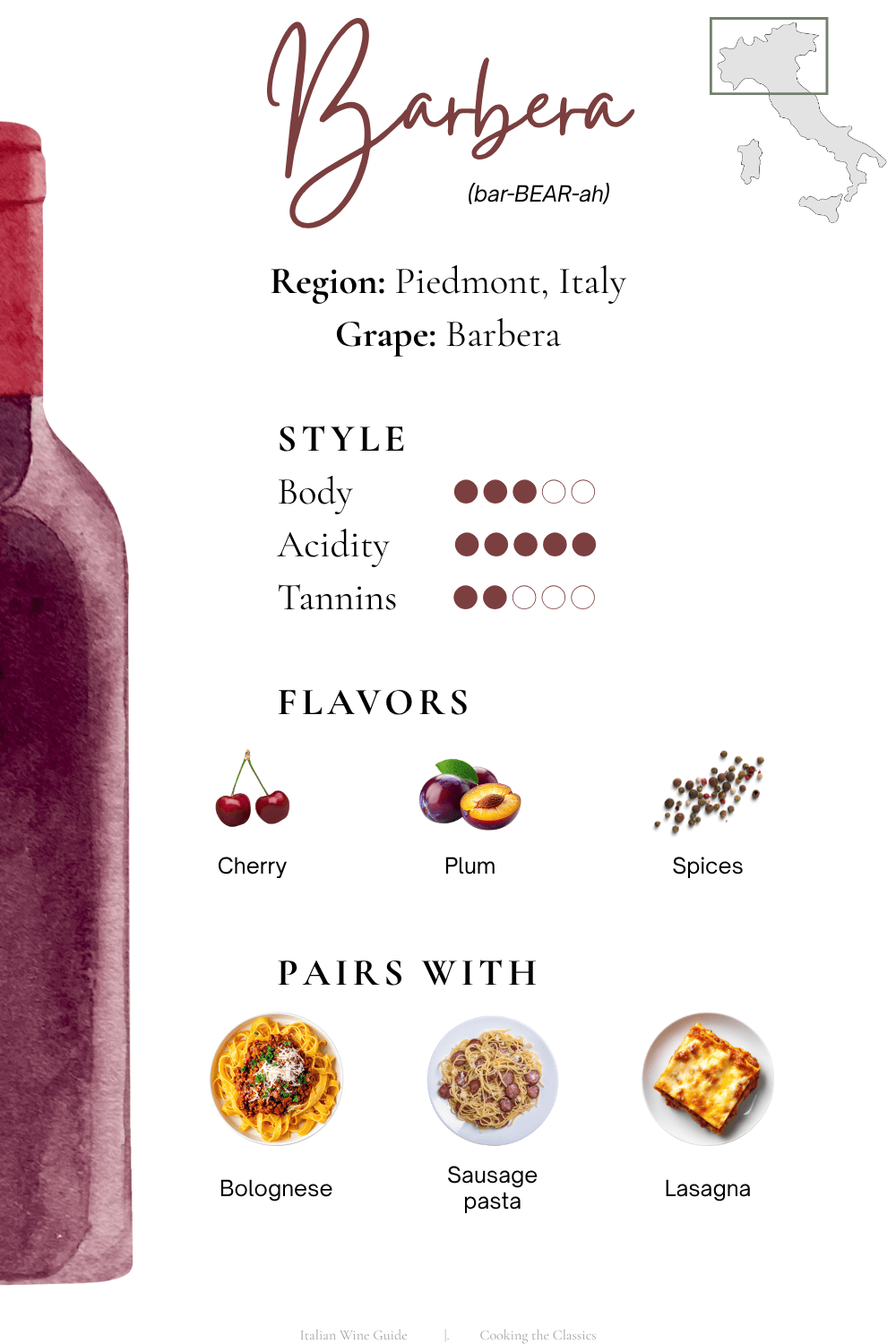
- Barbera (Northern Italy)
- Dolcetto (Northern Italy)
- Soave (Northern Italy)
- Vermentino (Islands)
- Nero d’Avola (Southern Italy)
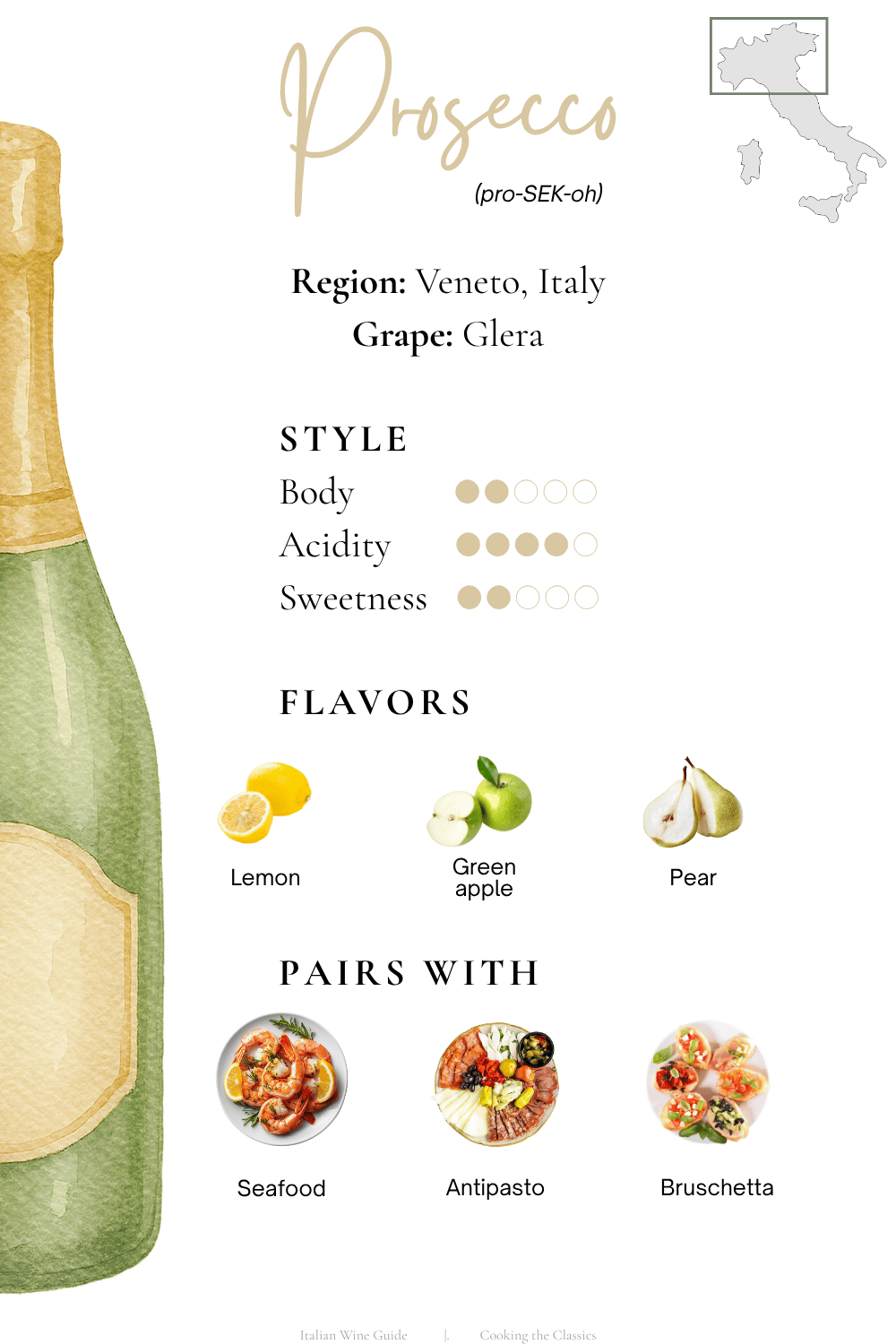
- Prosecco (Northern Italy)
Over time, you’ll start to recognize regions on wine labels and have a better idea of what the wine will taste like before you even open the bottle.
Italian wine can seem complicated, but once you understand the regions, it becomes much easier and much more enjoyable to explore.
6 Italian Wines to Try First
- Chianti
- Barbera
- Dolcetto
- Soave
- Vermentino
- Prosecco
Italian wine can seem complicated at first, but learning the major regions is a great place to start.
Once you understand how Northern, Central, and Southern Italy differ, choosing wine becomes much easier. Over time, you’ll start to recognize regions on labels and have a better idea of what wines you enjoy and what foods they pair with.