Italian Cheese Guide
Italian cheeses are rooted in tradition and meant to be used in everyday cooking.
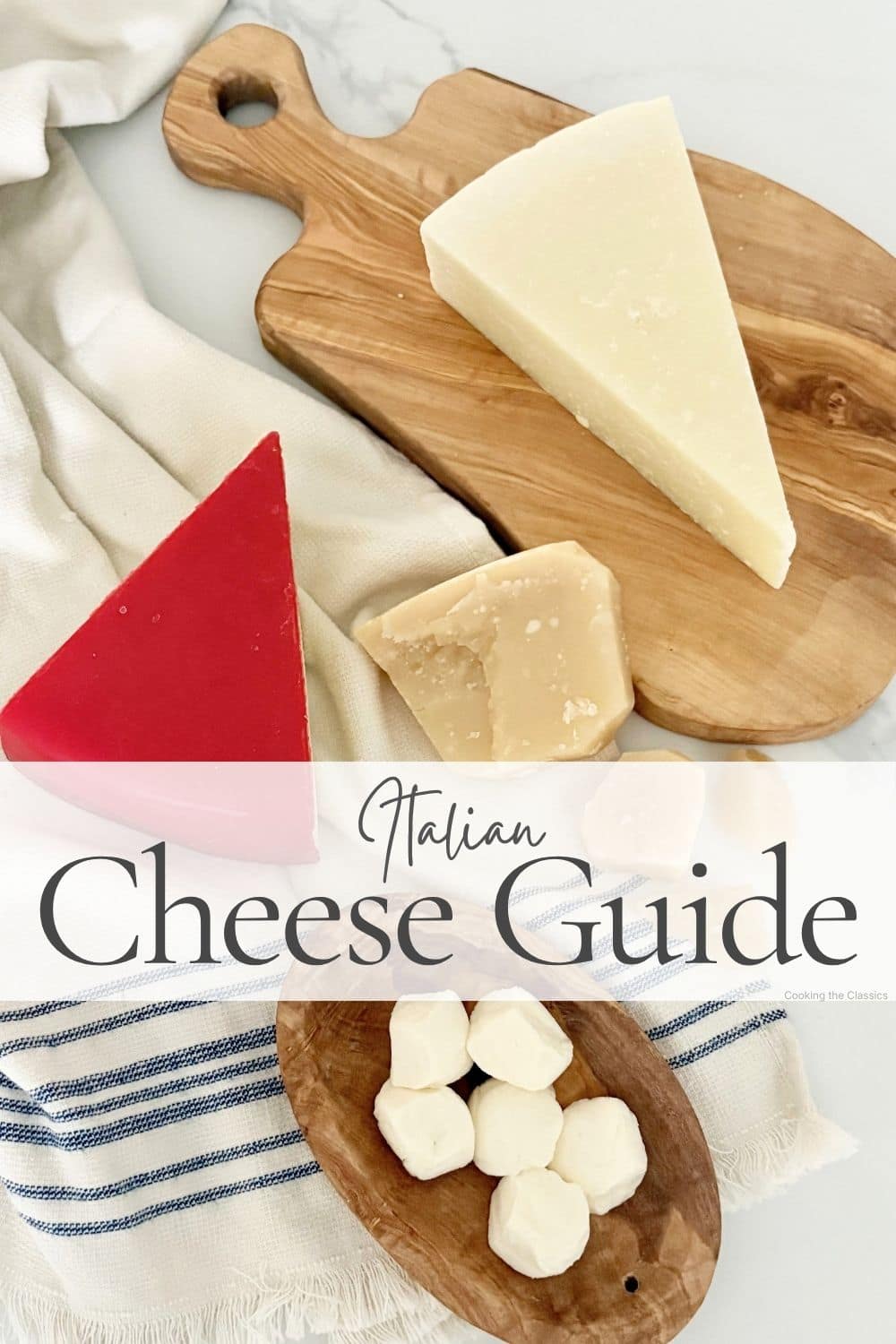
Italian cheese plays a big role in many classic Italian recipes, from pasta and risotto to antipasto plates and simple meals with bread and wine.
Some cheeses are used for grating, some for melting, and others are served fresh or on cheese boards.
Once you become familiar with a few common Italian cheeses, it becomes much easier to cook traditional Italian dishes and build simple meals around them.
Understanding Italian Cheeses
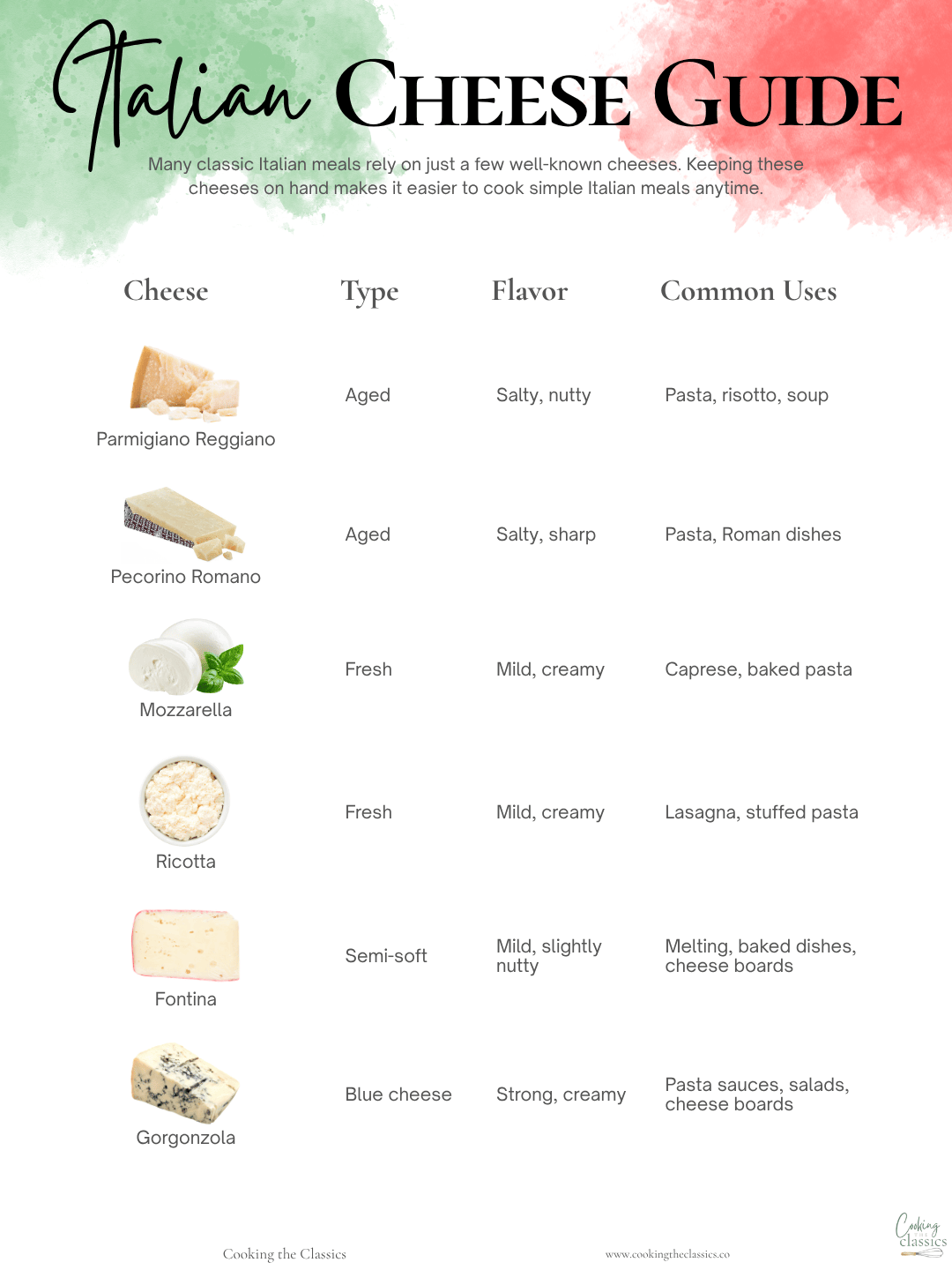
Italian cheeses are often grouped into fresh cheeses and aged cheeses. Fresh cheeses are usually soft, mild, and creamy, while aged cheeses are firmer, saltier, and used more often for grating over dishes.
Fresh cheeses like mozzarella and ricotta are commonly used in salads, baked dishes, and appetizers. Aged cheeses like Parmigiano Reggiano and Pecorino Romano are often grated over pasta, soups, and risotto to add flavor.
You don’t need to know dozens of cheeses to cook Italian food. A small group of cheeses will cover most classic recipes.
Common Italian Cheeses to Know
There are many cheeses in Italy, but a few appear in classic recipes again and again. Learning these cheeses will make it easier to cook many traditional Italian meals.
Each of these cheeses is used in different ways, from pasta dishes to desserts to cheese boards.
How Italian Cheeses Are Used
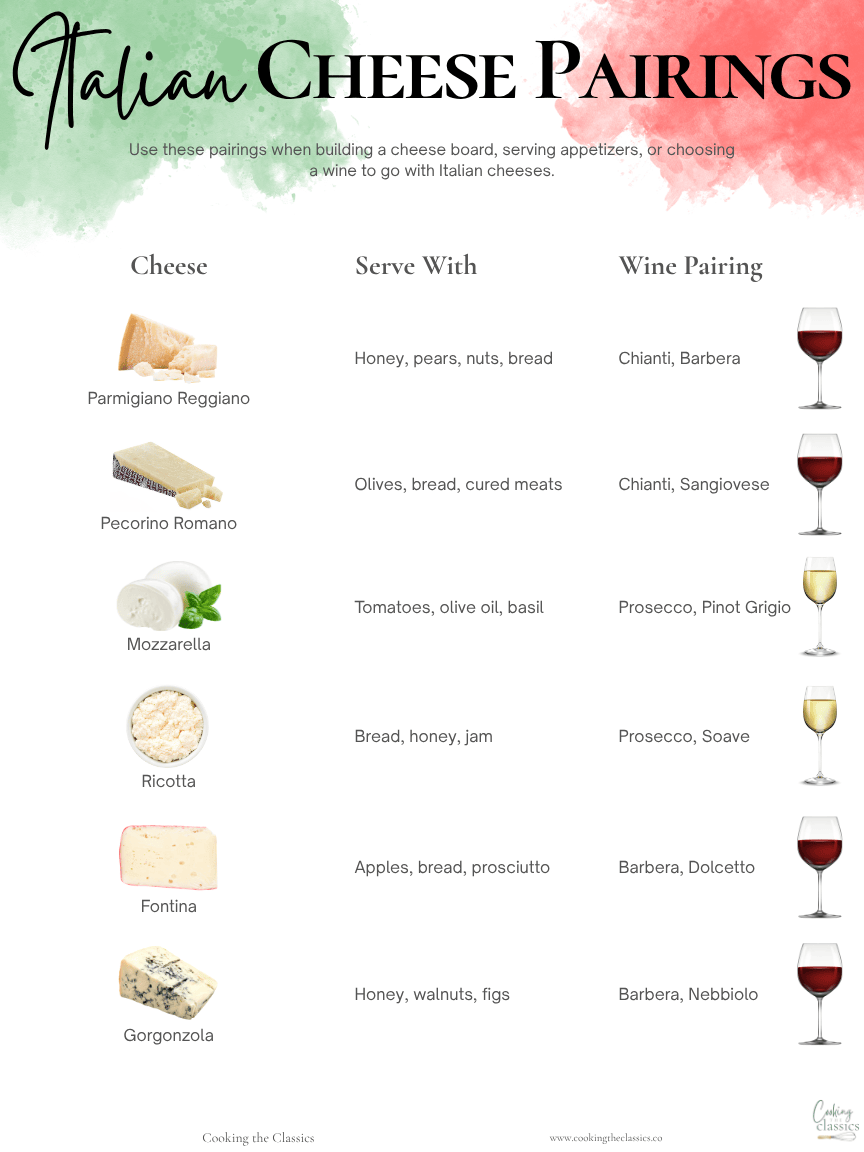
Italian cheeses are not only used in cooking, but are often served on their own with simple foods like bread, fruit, honey, olives, and cured meats. Many Italian meals begin with small appetizers or a cheese board, and different cheeses are typically served with foods that balance their flavor and texture.
Aged cheeses like Parmigiano Reggiano and Pecorino Romano are often served with bread, olives, nuts, or cured meats. Fresh cheeses like mozzarella and ricotta are commonly served with tomatoes, olive oil, bread, honey, or jam. Softer cheeses like fontina and stronger cheeses like gorgonzola are often served with fruit, nuts, or honey and are commonly included on cheese boards.
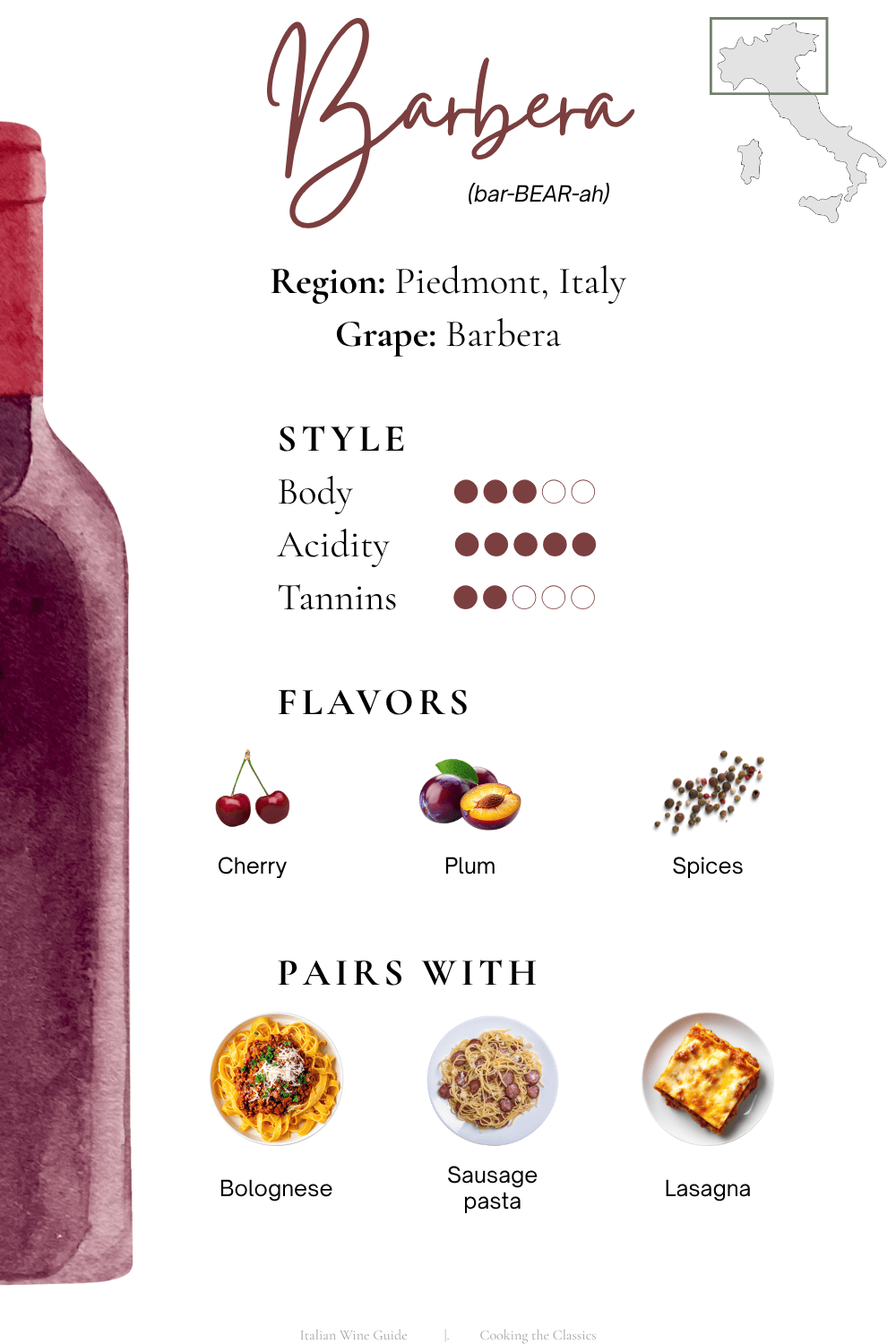
These cheeses are also often paired with wine, and choosing simple foods and wines that complement the cheese is an easy way to build appetizers, cheese boards, or light meals.
Italian Cheeses I Like To Keep On Hand
With a few Italian cheeses in the refrigerator, I can make many classic Italian meals without needing a special trip to the store.
The cheeses I usually keep on hand are:
- Parmigiano Reggiano
- Pecorino Romano
- Fresh Mozzarella
- Ricotta
With these cheeses, you can make pasta, baked dishes, appetizers, salads, and simple meals with bread and olive oil.
Meals You Can Make With These Cheeses
With just a few Italian cheeses, you can make many classic Italian dishes, including:
- Fettuccine with Butter and Parmesan
- Baked Rigatoni with Bolognese
- Lasagna
- Asparagus and Prosciutto Wraps
- Cheese Boards (with bread and cured meats)
- Risotto with Parmesan
You don’t need a large selection of cheese to cook Italian food regularly. A few good cheeses will work for many traditional recipes.
Italian cooking is often about using a small number of good ingredients and preparing them simply.
Learning a few Italian cheeses and how they are used is an easy way to make many classic recipes taste better and feel more complete.