How to Read an Italian Wine Label
Italian wine labels can look confusing at first, especially compared to wines from the United States.
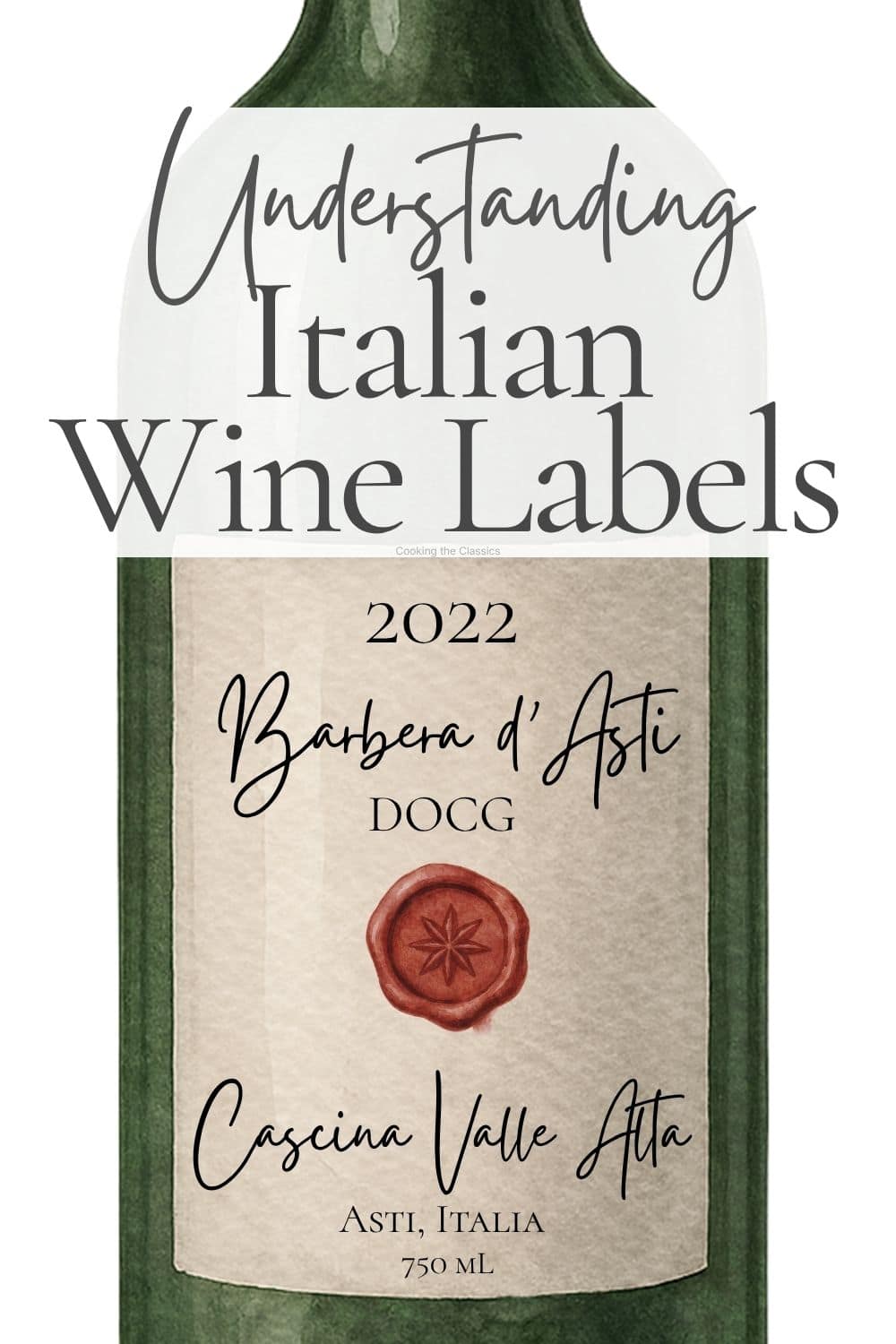
Instead of large grape names on the front, Italian bottles often list regions, classifications, and producer names.
Once you know what to look for, Italian wine labels actually tell you a lot about what’s in the bottle.
Start With the Region Name
The most important thing on an Italian wine label is usually the region or place name, not the grape.
For example:
- Chianti
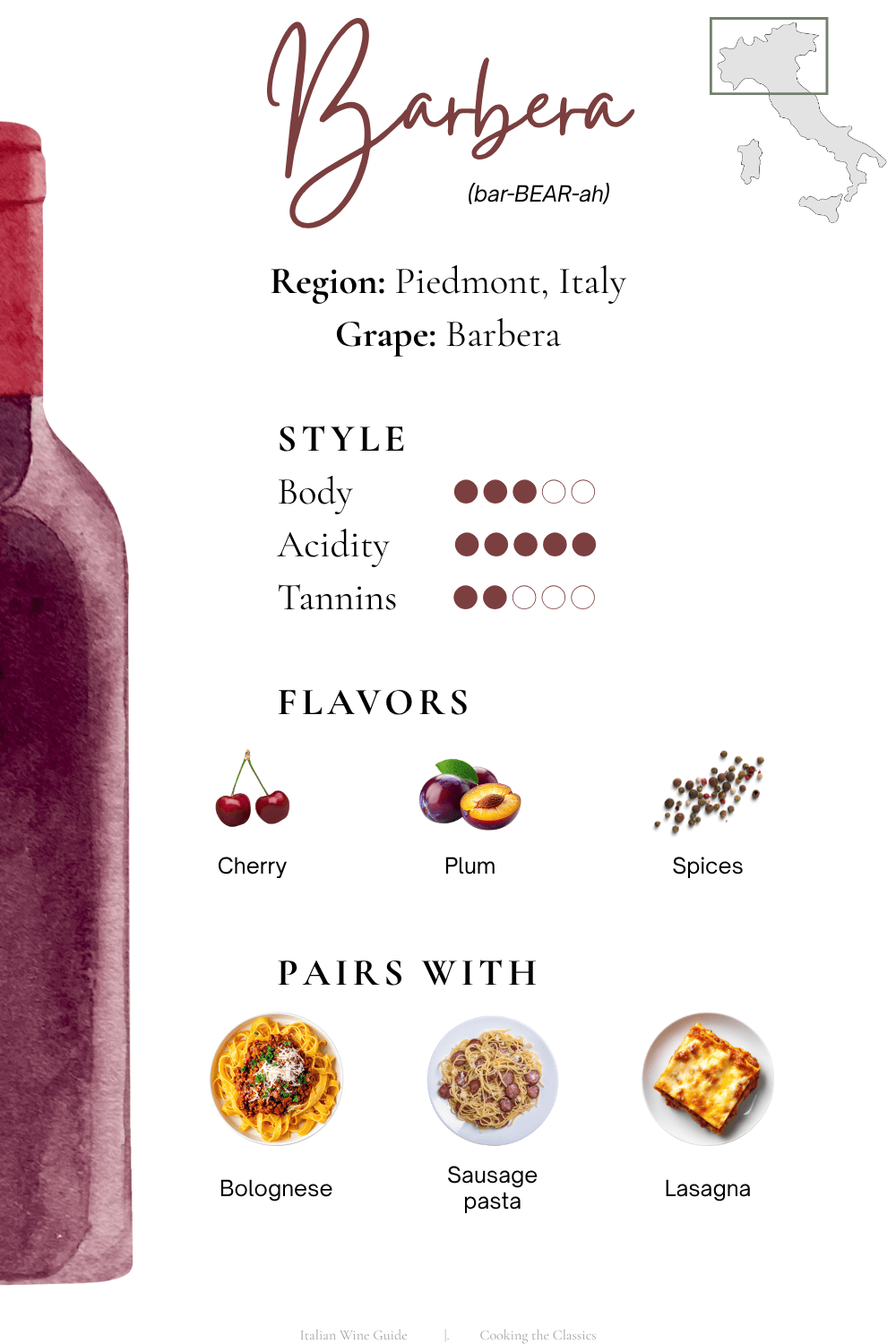
- Barbera d’Asti
- Soave
- Montepulciano d’Abruzzo
- Barolo
These names tell you both where the wine is from and what grape is used, because many Italian wines are named after their region instead of the grape variety.
Once you learn a few common regions, reading Italian wine labels becomes much easier.
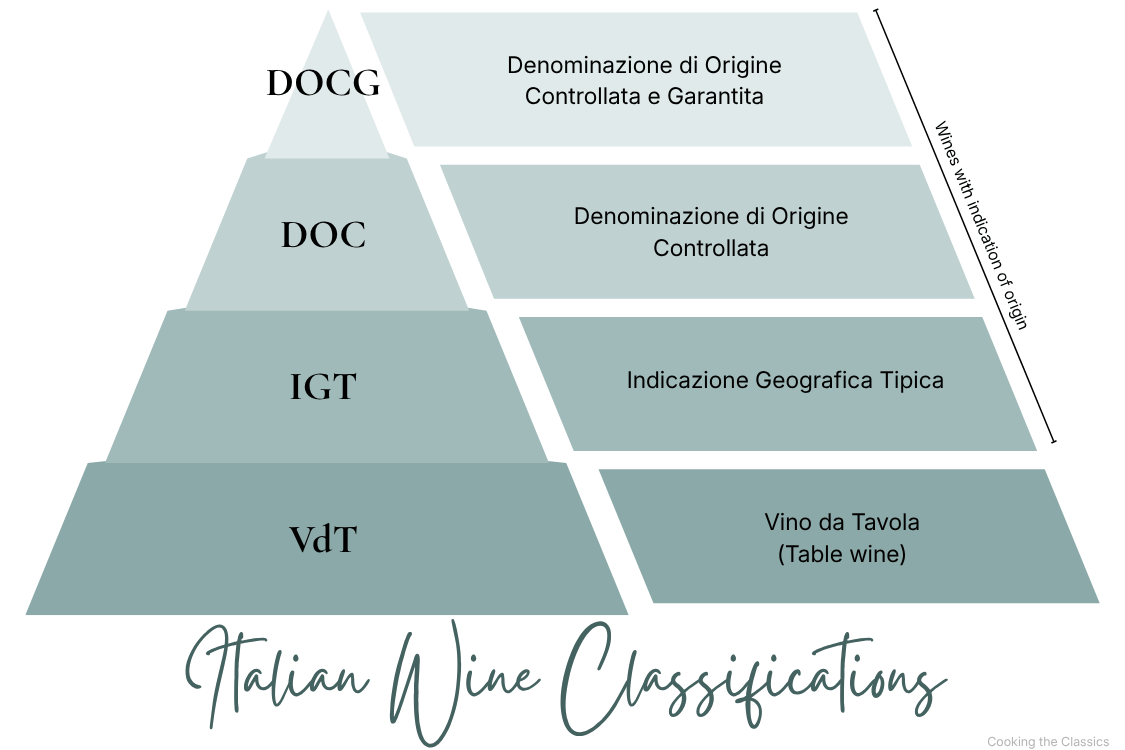
Look for the Classification (DOC, DOCG, IGT)
Most Italian wines will have one of these abbreviations on the label:
- DOCG – Highest classification
- DOC – Traditional regional wines
- IGT – More flexible wines, often modern styles
You don’t need to memorize all the rules, but a simple way to think about it:
- DOCG → Very traditional, tightly regulated
- DOC → Traditional and reliable
- IGT → More modern or experimental
All three can be good wines.
Find the Producer
The producer name is usually somewhere on the front label or near the bottom.
Examples might look like:
- Ruffino
- Vietti
- Argiolas
- Donnachiara
Over time, you’ll start recognizing producers you like, which makes wine shopping much easier.
Look for the Vintage Year
The year on the bottle is the year the grapes were harvested.
This matters more for some wines than others:
- Important for Barolo, Brunello, and Chianti Classico.
- Less important for Prosecco, Pinot Grigio, and Vermentino.
In general:
- Many red wines can age longer.
- Drink most white wines within a few years.
Reading an Italian Wine Label
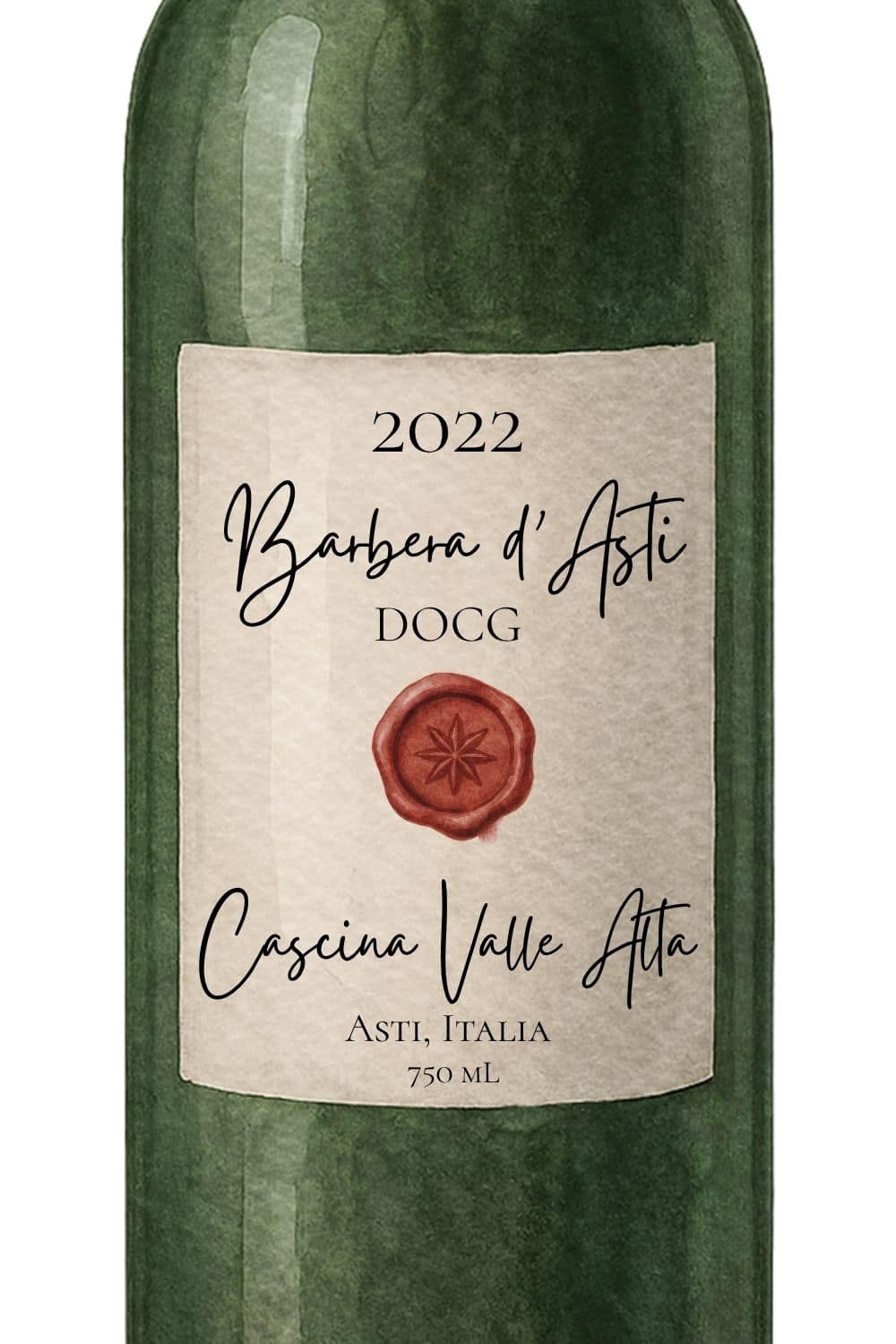
If a bottle says:
Barbera d’Asti DOCG
2022
Cascina Valle Alta
You can read it like this:
- Barbera = grape
- Asti = region in Piedmont
- DOCG = traditional regulated wine
- 2022 = vintage/harvest year
- Cascina Valle Alta = producer
Once you break it down like this, Italian labels start to make much more sense.
Simple Rule to Remember
When reading an Italian wine label, look for these four things:
- Region or wine name
- Classification (DOC, DOCG, IGT)
- Producer
- Year
If you can find those four things, you can understand almost any Italian wine label.
Italian wines are meant to be enjoyed with food and in everyday meals.
You don’t need to memorize every region or grape. Start by learning a few wines you like, pay attention to the region and producer, and build from there.
Over time, Italian wine labels become much easier to read and much more interesting.