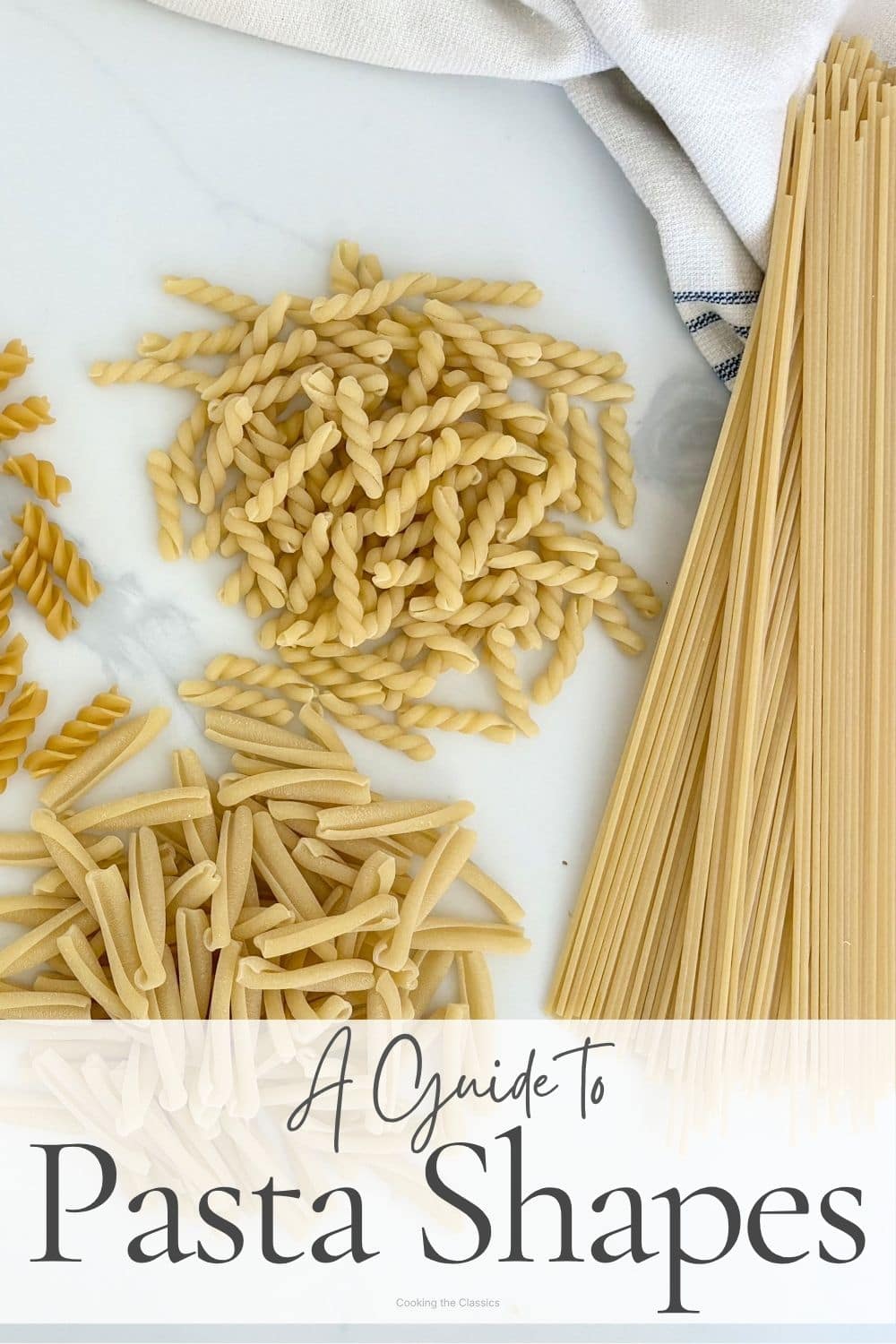
A Guide to Italian Pasta Shapes
Italian pasta comes in many shapes, and each one is designed to work well with certain types of sauces.
Some shapes are best with light sauces, while others are better for thick sauces, meat sauces, or baked dishes.
Once you understand a few basic pasta shapes and what they are best used for, it becomes much easier to choose the right pasta for a recipe.
Choosing the Right Pasta Shape
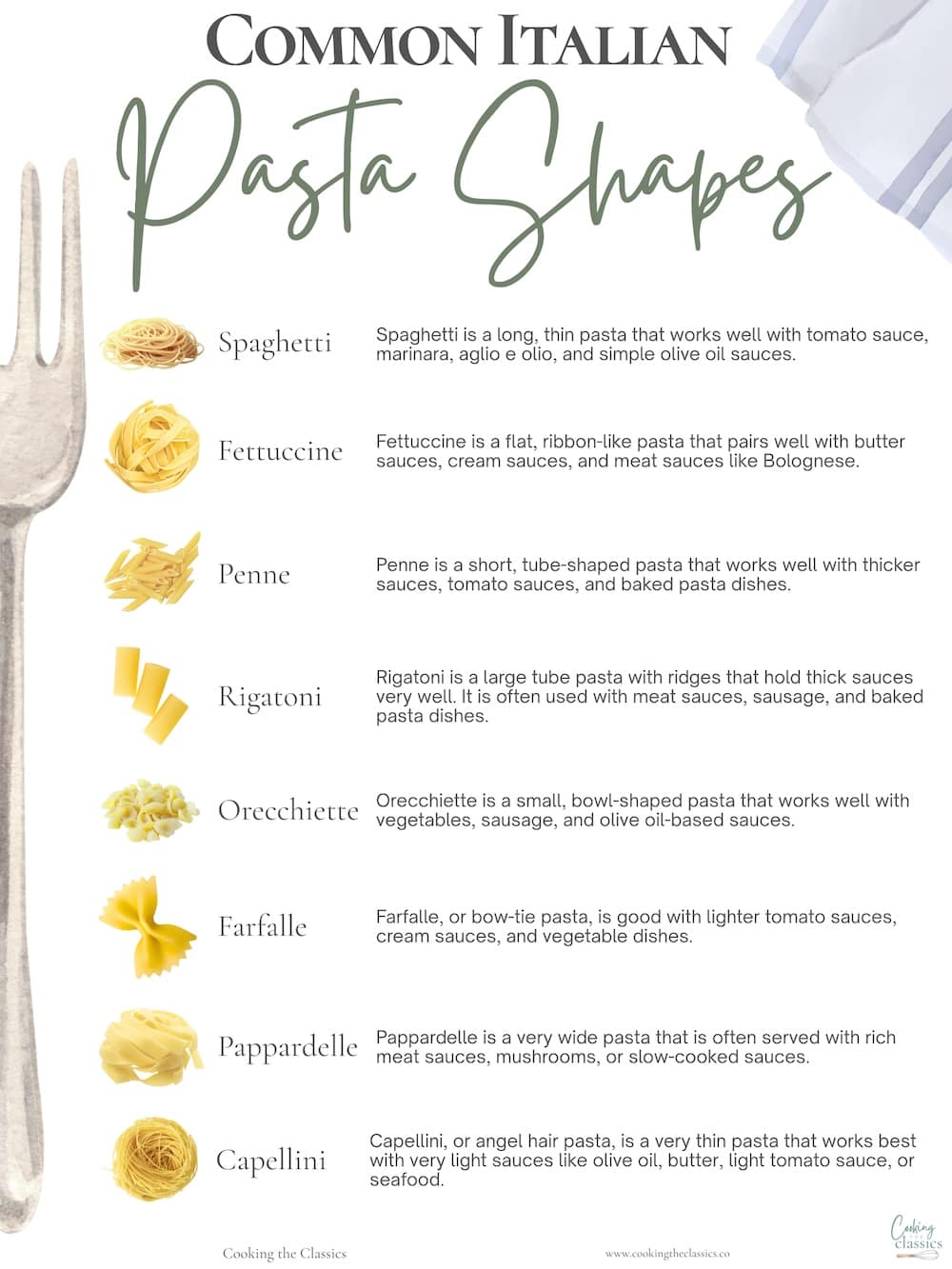
In general, long, thin pasta works well with lighter sauces, while short or wide pasta shapes work better with thicker sauces that can cling to the pasta.
For example, spaghetti is often used with simple tomato sauces or olive oil sauces, while wider pasta like fettuccine works well with butter, cream, or meat sauces. Short pasta shapes such as penne or rigatoni are good for thicker sauces, baked pasta dishes, and vegetable sauces.
You don’t need to know every pasta shape to cook Italian food. In fact, a small group of pasta shapes will work for most classic recipes.
Common Italian Pasta Shapes
Italian pasta shapes are designed to hold different types of sauces, from light tomato sauces to rich meat sauces.
Learning a few common pasta shapes will make it easier to cook many traditional Italian dishes.
Pasta Shapes and Sauce Pairings
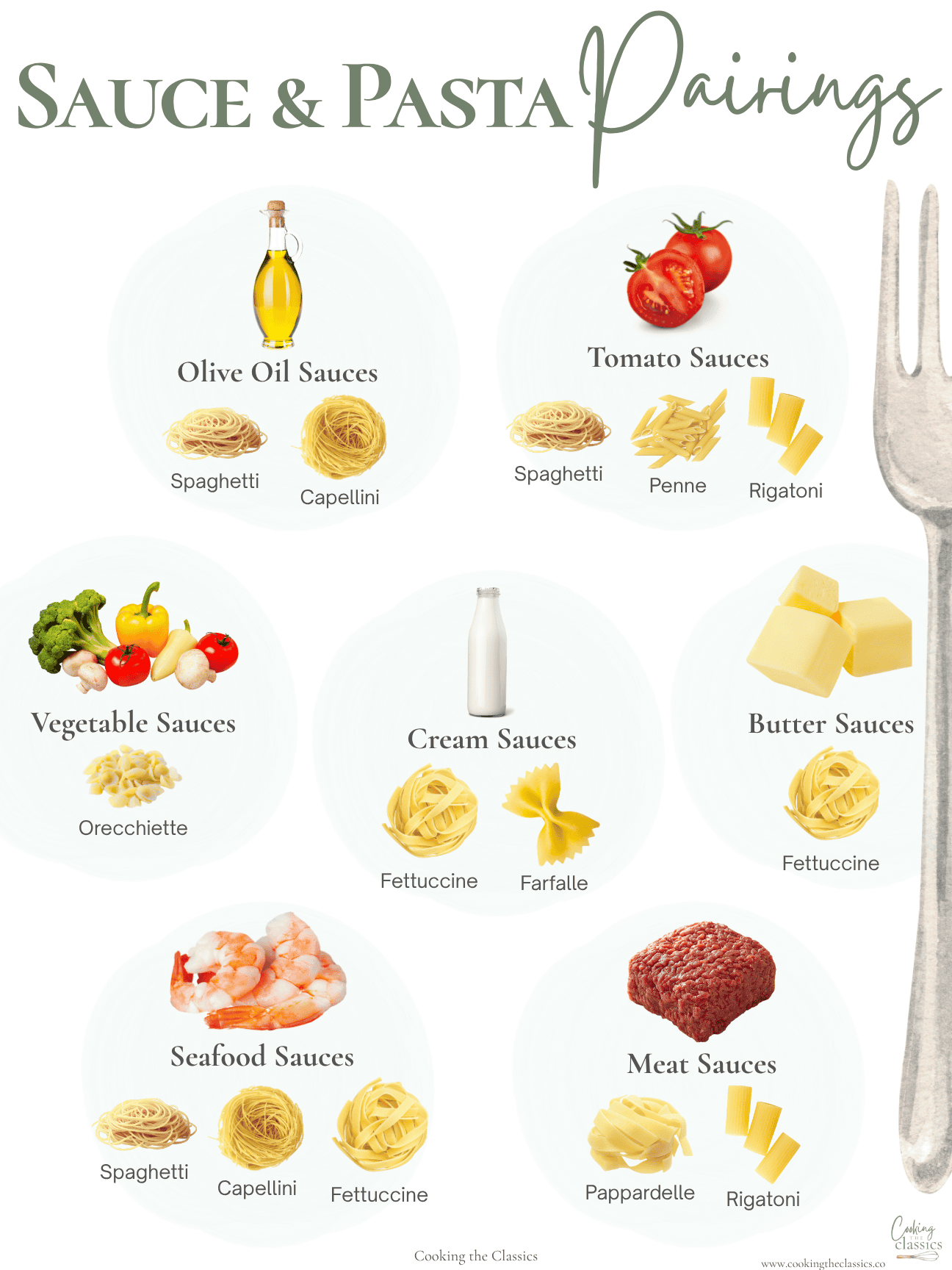
As a general rule, lighter sauces pair best with long, thin pasta, while thicker sauces work better with wider or tube-shaped pasta that can hold the sauce.
Matching the pasta shape to the sauce helps the dish come together and makes the pasta easier to eat.
Pasta Shapes I Like To Keep On Hand
If I keep a few pasta shapes in the pantry, I can make most pasta dishes without going to the store.
The pasta shapes I usually keep on hand are:
- Spaghetti
- Fettuccine
- Penne
- Rigatoni
- Orecchiette
- Small pasta for soup (like ditalini or small shells)
With these pasta shapes, you can make tomato sauces, meat sauces, pasta with vegetables, soups, baked pasta dishes, and simple olive oil or butter sauces.
What You Can Cook With These Pasta Shapes
With just a few pasta shapes, you can make many classic Italian meals, including:
- Spaghetti with tomato sauce
- Spaghetti aglio e olio
- Fettuccine with butter and Parmesan
- Rigatoni with sausage and tomato sauce
- Penne arrabbiata
- Orecchiette with vegetables
- Pasta e fagioli
- Pappardelle with bolognese
You don’t need dozens of pasta shapes to cook Italian food regularly. A small group of pasta shapes will cover most classic dishes.
Italian cooking is often about choosing the right ingredients and using simple techniques.
Choosing the right pasta shape for a sauce is one of the easiest ways to improve a pasta dish. Over time, you’ll learn which pasta shapes you like for different sauces, and it will become second nature when cooking pasta.